Here’s today’s AdExchanger.com news round-up… Want it by email? Sign up here.
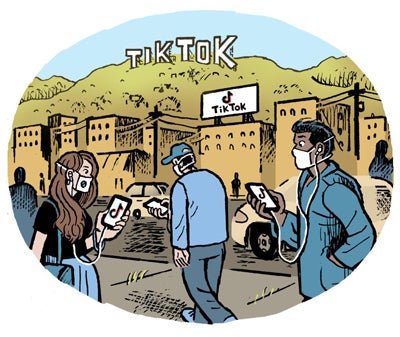
TikTok TV
Last week, TikTok announced a new comedy docuseries you’ll have to pay to watch.
Wait, what?
It was only a matter of time before TikTok launched its subscription show. TikTok, which prefers not to be called a social media platform, thank you very much, sees itself as a place where people come to be entertained, not talk to friends.
TikTok’s series is being co-produced by creator Jericho Mencke and content platform Pearpop. The first two episodes will be free for TikTok users, but access to the full eight-episode series will cost $4.99, THR reports.
Last month, TikTok announced a LIVE Subscription tool that allows creators with more than 1,000 followers to launch monthly subscription content offers. Creators get monthly dues, and subscribers get perks, such as badges and exclusive chat access.
Five bucks for eight episodes is a little steep, but TikTok is already pulling ahead of Instagram and Snapchat when it comes to generating revenue for creators, which can make it worth it for creators despite Apple’s 30% cut. The Apple tax has been a huge hurdle even for biggies like Twitter and Instagram to launch viable subscription or rev-share products. But TikTok is churning out new rev-share options at a dizzying pace.
And it’s a dark horse challenger to YouTube. Both are battling to attract creators and build their own thriving creator economy.

No Labels
Sticking with TikTok, success on the platform can be a double-edged sword.
Some recording studios are requiring musicians to reach arbitrary TikTok virality standards before they’re allowed to release new songs.
Trevor Daniel’s breakout hit, “Falling,” for example, eclipsed one billion plays on Spotify largely due to its original success on TikTok. It was a 2-year-old song that suddenly found its moment during the pandemic. But his label won’t release new music without a similar TikTok wave. Daniel has released snippets in the hopes of a viral moment, but for now his finished work is trapped in record label contractual purgatory.
Halsey, an artist who has sold 165 million records and garnered three Grammy noms, likewise can’t release finished work because her label requires a viral TikTok hook. Ironically, Halsey unlocked her new single by protesting the label on TikTok, thus generating earned media – and virality.
Labels are digging their own graves by forcing young musicians to succeed without their help, according to music and pop culture author Ted Gioia.
“The one last piece of leverage labels possessed was their marketing and publicity clout,” he writes. “But now labels want musicians to go viral on their own? Well, at this point the obvious question is: What does the label offer in return?”
By W3C Standards, This Is Success
Last week, this newsletter noted that First-Party Sets (FPS), one of many proposals percolating in the Chrome Privacy Sandbox, has become a lightning rod for complaints against Google coming from its ad tech opponents. FPS would allow Google to bundle data across YouTube, Search, Maps and its other owned properties.
Meta software engineer Ben Savage has a handy thread on the challenges of this approach. Aside from the competition issue, people likely won’t understand how the data is shared and aren’t clearly opting into the use of their data across Google properties. Domains are also bought and sold, meaning FPS would incentivize holding companies to combine as many sites as possible under one data-sharing umbrella.
Well, the W3C’s Privacy Community Group, which oversaw discussions of the FPS standard, has now dropped the idea, and it seems like it won’t move forward toward standardization.
John Wilander, the WebKit privacy engineer who reps Apple in many W3C groups, pointed out that shelving FPS is how proposals should work: “If we think every standards proposal should result in a standard, we don’t need much of a process, do we? This stuff is hard. Google did the job. Others pitched in. This is how it’s done.”
On the other hand, the proposal isn’t officially dead and, push comes to shove, a lack of W3C standardization doesn’t stop Chrome from shipping FPS if that’s what it wants to do.
But Wait, There’s More!
The US ad industry cut 2,400 jobs in May. [Ad Age]
Snapchat is partnering with restaurant review site The Infatuation to help people find local eats on the Snap Map. [TechCrunch]
A Q&A with Vox Media’s Camilla Cho on the publisher’s commerce newsletter expansion. [Digiday]
Dave Clark, CEO of Amazon’s worldwide consumer business and a top lieutenant of Andy Jassy, will resign July 1 after more than two decades at the company. [CNBC]
Mike Shields: Netflix needs advertisers. But advertisers really need Netflix. [blog]
You’re Hired!
Disney poaches Apple gaming exec Mark Bozon to lead its metaverse creative strategy. [Variety]