Facebook is changing the way it values ad placements across its Audience Network as part of an ongoing transition from proxy ad metrics to actual business conversions.
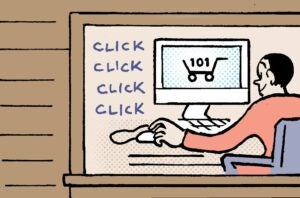
“The dominant proxy for the industry, and it’s been true as well for us, is the click,” Facebook ad tech head David Jakubowski told AdExchanger. “[Except] no marketer really wants the click – they want that click to accomplish another objective – but they’ve just gotten used to the delta between the proxy and the actual outcome.”
The move will boost inventory quality across Facebook Audience Network (FAN) and inevitably create winners and losers among its tens of thousands of publisher partner apps and mobile sites.
FAN is a lucrative business that Facebook has invested in heavily this year while shuttering LiveRail and the desktop retargeting tech FBX. FAN allows Facebook to target advertising to its users across partner apps and mobile sites.
While advertisers want to apply Facebook targeting beyond Facebook’s properties, they don’t like the contextual inconsistencies of the publisher network. Facebook doesn’t control the network’s formats or policies outright.

“What we’re really doing is bringing more stability to the value that sits underneath a click by tying it to outcome-based conversion signals, what advertisers really want,” Jakubowski said.
For advertisers, the change is negligible. FAN ad buyers will be able to format campaigns toward clicks or more direct business metrics, such as lead generation, sales, foot traffic or downloads. Facebook models will then optimize toward those goals. Buying against business metrics is already standard protocol across Facebook and Instagram, but now even click proxy campaigns on FAN will be tied to back-end metrics, Jakubowski said.
On the supply side, however, the news does rock the boat a bit.
“We anticipate some people being big winners” in terms of FAN publisher inventory value, Jakubowski said.
“If you’ve been optimizing toward native experiences and have been on a path focused on mobile UX, you should see a bump,” he said.
Publishers with ads or formats that hold less attribution value, such as an app or site that games the size of the “X” to generate accidental clicks, will see their CPMs decline. The caliber of advertisers on these sites will also sink, reduced to those that only pay the lowest prices for inventory.
“Publishers want to build long-term, stable business and they do want to provide value for advertisers,” Jakubowski said.
But publishers have no visibility into what business outcomes an advertiser really wants when they are only buying against clicks.
Although publishers still won’t have that visibility, Facebook will reward properties that perform better, which will make FAN inventory quality look more like Facebook inventory.
“I’ve never had a marketer show up and say, ‘My business is on fire because of all these clicks,’” Jakubowski said. “It’s always something like, ‘You’ve helped me sell all these products.’”