 Agencies and holding companies are pointing to customized algorithms as a way to differentiate from the competition.
Tech providers, too, claim that algorithms developed in-house offer better optimization capabilities than those that are more generally available. But as these algorithms become more popular, the parameters of what entails customization are loosening.
In most cases, agencies still use general algorithms, not written with a specific campaign in mind, to drive numerous campaigns. As enterprise tech matured it became more verticalized, which helped algorithms take industry-specific shape.
This was the first step towards customized design. Increasing amounts of available data have created a new market for more nuanced customization.
“Brands should customize algorithms because it does little good to have a very fast and effective algorithm that does the wrong thing for their business,” said Kevin Geraghty, SVP of advanced analytics and decision sciences at agency 360i. “That’s a way to lose money faster and more efficiently.”

Unlike general algorithms, customized algorithms are built specifically for a particular campaign and require unique models and data sets, such as knowledge around how consumers have responded to past campaigns. The growth of programmatic and real-time bidding has created demand for customized algorithms, said Dan Lubetsky, SapientNitro’s performance marketing analyst.
For instance, imagine an advertising campaign surrounding a flu outbreak. Customization can help to determine where to increase the distribution of advertising for medicine, based on geography and consumer purchasing history.
“If a brand can pinpoint the right times, audiences behaviors and intents, they can use custom algorithms to gain a competitive edge,” Geraghty said.
Companies with unpredictable or seasonal business spikes tend to benefit best from customized algorithms.
“If you have a search marketing client in a category with a peak season such as taxes, flowers or jewelry, an algorithm can be fine tuned to create an advantage during the peak times when these brands earn the majority of their revenues,” explained Jared Belsky, president of 360i. “For these brands, there are critical time periods when every minute matters, and having the right bid will get a brand better ad placement than a competitor.”
Yet despite these benefits, brands have been slow to adopt customized algorithms. One big hurdle is that it takes a lot of resources to harness the huge data sets that power these algorithms.
The amount of information these tools must harness in order to make their unique, brand-specific computations, make them both expensive and time-consuming to develop.
“In the ad tech space, one of the big challenge is the amount of data you’re dealing with,” said tech company DataXu’s CRO, Ed Montes. “That’s a challenge from a media practitioner standpoint. There’s an overwhelming amount of data that can impede media-planning exercises. From a computer science and design standpoint, computationally complex problems also have huge run time issues, or the amount of time it takes for an algorithm to solve a problem.”
Another issue is that customized algorithms risk disrupting long-standing practices. This can be jarring both for the brand client as well as the media agency used to the traditional way of doing business.
“You start to tackle things that people don’t want to touch because they’re hard, like attribution and how that influences the marketing and technology landscape,” Montes said. “It may not be the most positive story for how agencies or marketers have invested their clients’ and companies’ funds.”
Lubetsky added: “Leveraging algorithms goes beyond the quality of the algorithm itself (which is undeniably important), as the decisions being made are only as good as the data and the people used to make those decisions. It involves reaching outside of the data set and pulling in custom research, experience-focused analytics and user details.”
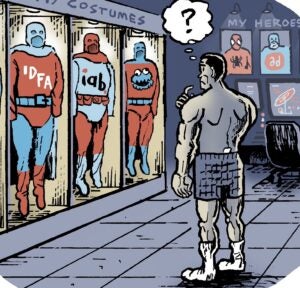
An additional problem is that customization isn’t as clear-cut as it seems. Many agencies claim to offer customization without actually developing algorithms in-house. Consequently, many so-called customized algorithms stretch the definition of customization.
“I think there’s a lot of confusion in the marketplace, and I think the marketplace doesn’t know it’s confused yet,” Montes said.
Belsky pointed out the haziness around how agencies get their algorithms. They can build in-house, rent or white-label another company’s technology or modify algorithms available on the open market. Whether agencies then openly acknowledge a partnership or try to promote the algorithm as proprietary is up to them.
Consequently, agencies might claim an algorithm offers a unique solution, when it really doesn’t. “There’s a lot of bluster about the power to do decisioning,” Montes said. “But, quite frankly, those decisions are all based on the same algorithm.”