Sickly Sweet Marketing
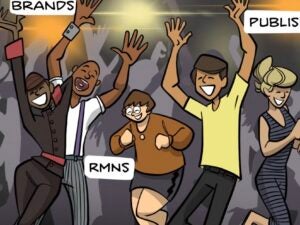
Food and beverage brands have gone off the rails with choosing trendy social marketing terms over truthfulness.
The latest example is a lawsuit against Starbucks that alleges drinks like its Sugar-Free Caramel Protein Latte and Sugar-Free Vanilla Protein Matcha actually contain about 20 grams of sugar per large order, as the Wall Street Journal reports.
The suit claims Starbucks does not categorize the lactose sugar contained in milk as sugar. Hence the questionable “sugar-free” labeling.
But the lawsuit sets aside another burning question: “What protein is in these drinks?”
The protein question is important because similar false advertising suits have targeted brands that tried to capitalize on the protein-rich diet trend.
Meanwhile, soda startup Poppi got tagged because, in order for a user to achieve the “gut healthy” prebiotic effects touted in its marketing, they would have to drink so much soda that their stomach lining would dissolve.
Other common social marketing terms can work online, but they become problematic when the products reach store shelves. Consider marketing speak like “vegan-friendly” (which actually means not vegan) or claims that fruit-flavored sugar pastes are basically the same as fruit.
The barf emoji might seem like a social-media-appropriate response to so much misleading marketing. But, while calling sugar-filled drinks “sugar-free” is apparently A-OK by social media standards, the use of disparaging emojis is frowned upon.
Trouble On The Horizon
Last year, Horizon Media and Havas announced a joint venture called Horizon Global. The goal was to provide white-glove service for global ads businesses, the better to compete with large agency holdcos for big brand contracts.
Combining Havas’ international reach and Horizon’s “mature media tools and tech” was framed as a win-win for both agencies, as Ad Age put it at the time of the announcement.
But, one year in, things aren’t looking so bright.
The company is still effectively “invisible” to many marketers, Tom Denford, CEO of media consultancy ID Comms, now tells Ad Age. He adds that all of the media pomp surrounding Horizon Global’s debut without the agencies taking concrete steps to operationalize the endeavor before the announcement made the launch feel like “just a press release.”
Denford and other critics argue that both Bob Lord, CEO of Horizon Media, and Renata Spackova, global chief operating officer of new core business at Havas Media Network, aren’t prioritizing the joint effort because both are too loyal to their respective agencies. Horizon Media refutes this.
Criticisms aside, Horizon Global has won Sketchers’ global media portfolio, and it has been considered for Zoom’s and Delta’s (though it ultimately lost). But proving it can play alongside the big holdcos will be an ongoing journey.
And … We’re Live!
Creator marketing is going the old-school route – which is to say, offline.
In recent years, social media has grown less social and more “broadcast” in its struggle to retain audiences, James Kirkham, co-founder of brand consultancy Iconic, tells Digiday.
Going IRL seems to be landing with brands. For instance, AT&T sponsored all of gaming and esports commentator Ludwig Ahgren’s in-person events over a six-month period last year.
When it comes to community-building, live events allow fans of a creator to “actually see who the person is,” says UK-based creator Maya Raichoora. That’s the way to build a lasting platform, she adds.
In-person events are also a way for influencers to create experiences that resonate in people’s memories longer than an ephemeral social post. Plus, a live event has an air of exclusivity that can’t be manipulated and reused the way digital content often is. Which is a growing concern for creators in the age of AI and clipping.
Clippers now sometimes earn more than the creators whose content they’re clipping, notes Joel Beya, content creator and founder of football media platform Cheeky Sport – but you can’t exactly clip a cocktail party.
But Wait! There’s More!
Morning Brew acquires Express Checkout, a newsletter and creator-based media brand covering the CPG industry. [Adweek]
The global internet has been replaced by regional closed networks. [Politico]
State laws are struggling to keep up with AI-generated election ads, with campaigns spending $16 million on AI ads so far this election season. As a result, the list of candidates suing their opponents over deepfake ads keeps growing. [Axios]
Combined ad spend for the Texas Senate race between Ken Paxton and James Talarico has reached $259 million, or the equivalent cost of over 32 million Buc-ee’s brisket sandwiches. [The Texas Tribune]
Super Bowl ads are sold out, but Disney is still selling spots for $12 million in case some of the brands who paid $10 million get cold feet about their spending commitments. [Variety]
OpenAI is trying to make its ads look prettier (and easier to measure, of course). [Digiday]
Companies are moving away from OpenAI and Anthropic for their AI frameworks, instead trying (far cheaper) open-source models. [Fortune]
StubHub is experimenting with dynamic ticket fees, which resulted in nine people seeing eight different prices for the same Harry Styles tickets in a recent test. [NBC News]
Move over, Anguila! Slovenia’s .si domain is seeing a surge in registrations following President Trump’s executive order rebranding AI as “super intelligence.” [TechCrunch]
Want more attention on LinkedIn? Post a selfie. [Business Insider]
You’re Hired!
Skydance, the name for the combined Paramount-Warner Bros. Discovery merger, officially announced its senior executive leadership team on Monday. [Deadline]