
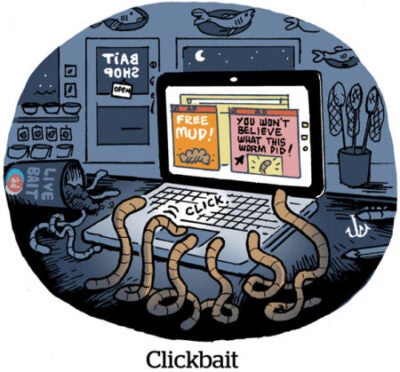
ClosedWeb
The Israeli ad tech startup OpenWeb, known for publisher tools like monetized comment sections, is going through bankruptcy proceedings, Adweek reports.
The debt owner, Mars Growth Capital, has a lien on the company’s assets and some $20 million to clear. And that’s just what Mars is due. OpenWeb owes another $32 million to creditors and suppliers (good luck collecting).
Diverting its insolvency would have entailed cutting 55% of OpenWeb’s workforce to refocus on profitable units. But even that reorg would require a cash injection of another $19 million.
OpenWeb announced a $150 million investment round in November 2021 valuing the company at $1.5 billion. The New York Times, Dentsu Japan, Samsung’s venture capital arm and Scott Galloway were among OpenWeb’s backers and new board members at the time.
OpenWeb quickly put its funding to use, acquiring Adyoulike ($100 million), Jeeng ($100 million) and Hive Media Group ($60 million).
But the company uncomfortably straddled the digital news economy. Its role as a comment board operator, placing widgets at the literal bottom of site pages made it a chumbox-type operator. And it worked with low-quality news and info sites, which made it a strange investment for The New York Times.
Buy Buy Birdie
Retailers are divided on agentic shopping. Consumers, not so much.
Some large retailers, including Gap, Walmart and Best Buy, already have partnerships with Meta’s new Muse agent, which includes an autonomous shopping feature.
Other retail companies, such as Tapestry, the parent company of Coach and Kate Spade, permit agents to browse their sites. But they don’t allow agents to complete transactions, citing concerns about hoarding inventory in checkout carts, as well as fraudulent purchases, the Wall Street Journal reports.
Still, Tapestry is developing its system to allow agents at the checkout step, in case that’s a feature it decides to offer down the road.
Other companies are more restrictive. Amazon blocked Muse altogether, due to consumer privacy concerns and the fact that Muse doesn’t announce itself as a bot, and eBay blocks all agents that don’t have express permission to view its site.
This more conservative approach aligns with the mindset of most consumers at this early stage of agentic AI; according to a survey by payments firm NMI, only 3% of adults in the US would trust an agent to buy something for them.
By doubling down on a service that 97% of the population isn’t sold on, there’s a good chance that retailers wouldn’t just lose sales, but also consumer trust.
Anotha One
Say hello to yet another streaming service.
Turnstr+ is a free, ad-supported streaming platform that officially launched on Friday. It bills itself as having a “creator-first” focus compared with more traditional streamers. It also has a content slate that’s heavily weighted toward movies, including original titles from Chris Stokes, founder of a production company that’s behind several originals on BET+ and Tubi.
Although Turnstr+ is free to watch, viewers have to create an account using personal information, including email address, age and gender, to access the content. (How else would the platform lure in advertisers?)
The ad experience is clearly still in its early stages, based on AdExchanger’s testing. Clicking around several titles elicited pre- and mid-roll commercial breaks that replayed the same Spanish-language ad creative from eyewear brand Zenni. (Which is weird, since the account we created is associated with an English-only household.)
Guess it’s not just the established streaming platforms that struggle with making CTV ads less annoying.
But Wait! There’s More!
Amazon Marketing Cloud is Amazon’s secret ad tech weapon. But it’s still largely blind to the creator economy and AI shopping. [Next in Media]
Why are companies making their AI agent mascots so cute? To stave off the sense of impending doom. [WSJ]
The combined Paramount x Warner Bros. company announces its official name: Skydance. [NYT]
Bad news for travel advertisers: The US is the only major country on Earth whose tourism numbers are in decline. [Semafor]








