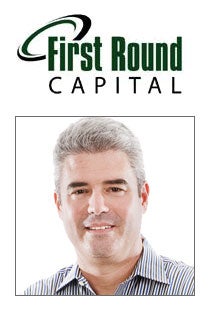
 Chris Fralic is Managing Partner of First Round Capital, an early-stage investment company. In an update of his interview a year ago, Fralic recently spoke to AdExchanger.com about the investment climate and the digital advertising ecosystem.
AdExchanger.com: In retrospect, what has surprised you about last year’s acquisition of Invite Media by Google?
CF: I’m impressed with how fast Invite Media has grown inside of Google which probably isn’t too surprising, but more surprised that there haven’t been more acquisitions in the space to date and yet there’s still a fair amount of investment going in. I still think there will be more M&A activity around DSP’s, but many of them have now shifted and adapted and are adding Audience Management/DMP and other services to their offerings.
Along those lines – where do you think the next “Google” will come from? Or, what will this new company’s traits look like?
You could argue that Facebook is the new Google, and Google is the new Microsoft. A real differentiator for Facebook is social on a scale never seen before, and on a relative basis great companies like Google and Apple haven’t fully realized their social potential yet. The other big factor with Facebook is they’ve enabled a thriving platform with lots of companies making lots of money with them.
What broader trends is First Round seeing today from an investment perspective?
We continue to see a lot of great companies in the advertising and ad tech/infrastructure space, and one strong theme is companies helping marketers reach users where they’re spending more and more time, on platforms like Facebook. We’re also seeing a lot of exciting companies in new online shopping models and e-commerce infrastructure. We’re also increasingly seeing “mobile first” and online/offline models like @HotelTonight and @Uber.

Have there been any recent “tweaks” to the investing thesis for First Round capital? Have you “pivoted”?
We’ve remained consistent to the original First Round Capital model in terms of the type and number of companies we invest in each year, and the average initial investment size. We spend a lot of time on how we can scale beyond just FRC investment professionals, and on building a platform that provides structured value to our Community of Entrepreneurs with things like our Advertising Summit and other tools that help them connect with and leverage each other.
One example of connecting and sharing last week was that was a few folks working in some of our NYC portfolio companies decided to put on an informal event to meet other employees of First Round NYC companies – over 75 showed up and it looks like they’ll be doing it again in the future. Another example was our third Tech Talk that we held at AOL Ventures featuring Mike Nolet aka www.mikeonads.com, where a sold-out house got to hear how the CTO/co-founder of AppNexus scales to manage 10 billion+ ads per day – details on that event can be found here, and we’ll have more in the future.
We also opened our NYC office last year in response to all the companies we already have there – over 30 active companies at this point – and to support the continued growth and opportunities that are in New York.
What’s your view on the state of digital advertising technology today? Too complicated, for example?
It is a very complicated space that’s getting more complex on a lot of levels, but it’s also a huge and growing market that can support a lot of companies. A big factor is the trend towards scale and consolidation – stats from the recent IAB report show that 91% of all online ad revenue comes from the top 50 sellers, with 72% from just the top 10 sellers. Video Ad Revenue growth is a great example – when we made our first online video investments in 2006 the US market was maybe $50-100M, today it’s $2B and expected to grow to $10B by 2016. One key factor is what’s really driving growth and what’s behind it. For example when I first heard about retargeting/remarketing I thought it was a good idea and nice feature, but not a huge idea. But in reality today it’s driving a vast percentage of lift and response across the landscape – maybe as much as 50% or more in one form or another.
Beyond competitive pressure on individual deals for your company, are there any negatives (for vc, entrepreneurs, etc.) to having a funding climate for digital startups that seems to be awash with investment capital?
There’s probably never been a better time for technology companies to raise capital. “Hot Deals” are getting done faster and at higher valuations than we’ve seen in a long time, and the quality and quantity of companies and entrepreneurs continues to rise. The negatives to be on the lookout for are down rounds as things cool off – it’s not fun, and some of the newer entrepreneurs haven’t been through it before.
If you’re running a successful startup, what are the factors involved regarding knowing when to exit? And when do you pull the trigger?
We like to work with entrepreneurs who are playing for big wins, but we also look to help them maintain optionality and make the best decision available to them at a certain point in time. Rational round sizes and valuations can help maintain maximum optionality, while still offering the chance to build a “LinkedIn” size exit over time. One analogy we use is the “local versus the express” – you can take an express train from Philly to NYC in the form of a large funding round with a high valuation and a singular goal/exit. Or you can take the local train and stop in Princeton and take a look around and see if this is a good time and place to get off based on market realities, or continue on your path. My experience is that most entrepreneurs are highly inclined to take the first offer that appears, but they need to remember that companies don’t become huge without turning down multiple offers along the way.
Follow Chris Fralic (@ChrisFRC), First Round Capital (@firstround) and AdExchanger.com (@adexchanger) on Twitter.