

 Three months after launching a pilot program for mobile app install ads, Twitter has made the offering available to all advertisers.
The format is a bid to capture surging app promotion budgets that have been a boon to Facebook, Pandora and dozens of mobile-specific ad networks and demand-side platforms (DSPs) over the past two years.
Ride-sharing service Lyft, EA and game maker Dots were among the app program’s beta advertisers. Dots used it to drive downloads of its TwoDots spinoff game, calling Twitter “an essential user acquisition channel.” Twitter has declined to say how many install campaigns have been trafficked using its platform.
App install and app re-engagement products can be targeted using many of the same capabilities available through Twitter’s other ad formats, including tailored audiences (website and CRM retargeting), interest-based targeting, keyword-based targeting and TV targeting. Twitter can also serve ads to users deemed more likely to respond to install ads.

App marketers can customize the creative aspects of their ads using Twitter’s Promoted Tweets and app cards formats. Those formats support either a custom image and app description or an app’s default icon and description. And landing pages for app re-engagement ads can be a deep-linked page that can be opened directly from Twitter.
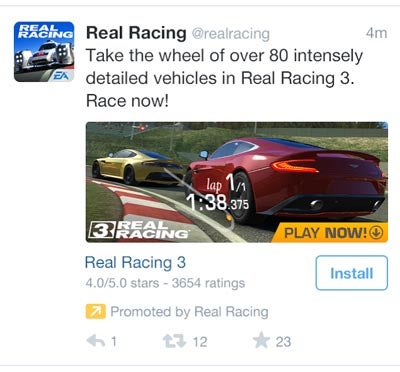
Facebook’s program is the gold standard in the install ads category, and Twitter’s new formats take a few pages from its rival’s playbook.
Just as Facebook did, the company has set up partnerships with a bunch of app analytics firms to track the effectiveness of its Twitter campaigns. Kochava, Fiksu, HasOffers, Grab, AppsFlyer, Adjust and Criteo’s AD-X Tracking subsidiary are all empowered to track installs and post-install actions that are derived from the Twitter platform.
To further support tracking needs of app install advertisers, Twitter has introduced a new pricing model, called cost-per-app-click, that only charges for clicks that lead a user to an app store, or open an app if a user already has the app installed.
“Traditionally Twitter has used a cost-per-engagement model that charges advertisers and campaigns that use any kind of engagement. But mobile app marketers are … only interested in paying for specific actions,” said Kelton Lynn, a Twitter product manager who guides the company’s efforts around mobile app promotion.
June 30 happens to be the end of Twitter’s second quarter, following a couple of earnings calls that have not gone especially well for the company. While the install program won’t generate material revenue for Twitter this quarter, it may help management make a plausible case for revenue acceleration in 2014 when they present second-quarter milestones later this summer.
There’s no question the app opportunity is large. King.com, publisher of Candy Crush Saga, spent $377 million in 2013 to promote its apps, and dozens of app marketers are believed to invest in excess of $10 million monthly each in app promotion. While much of this investment goes to game promotion, a growing fraction is used to support adoption of branded apps as well, from banking utility apps to music streaming apps.
Twitter aims to roll out a self-serve interface for the ads, but for now advertisers will need to work with a Twitter rep to get their app marketing campaigns live.







