 Creating a futures marketplace is easier said than done, but over the years, the TV upfront model has been adopted and refined by parts of the ad industry in a multitude of ways.
The latest comes from AOL, which this past week unveiled a plan to hold a “Programmatic Upfront” in September. The AOL event is designed in part to capture the increased ad spending at the end of the year, while positioning itself as the simple alternative to agencies who must work the long line of ad technology vendors for exchange-based buying.
The history of the upfront goes back to the early days of TV advertising in the 1950s. But it wasn’t until 1962, when ABC decided to schedule all its premiering shows during a single week in September that the idea of paying in the spring for ad inventory that would run in the fall began to take shape.

As cable TV shifted from old broadcast reruns and uncut movies to more original programming in the 1990s, networks like Turner and Discovery began holding similar presentations for upcoming programs, despite the fact that most channels didn’t stick to the fall season. Eventually, TV upfronts became more niche with the introduction of the “kids upfront,” for children’s programming, and the Hispanic upfront, which capitalizes on the growing importance of that demographic and the popularity of Spanish-language TV, began to emerge.
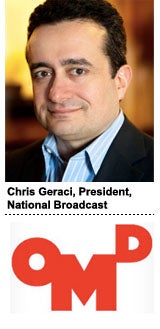
Chris Geraci, president of national broadcast for Omnicom media shop OMD, says, “In essence, the upfront is about managing scarcity in primetime programming mostly, but in any coveted slot for premium TV programming,” Geraci said. “While the process is decades old, it’s more relevant than ever, since media fragmentation has only increased the scarcity of prime spots.”
At that point, it was only natural that online advertising got into the act when Publicis Groupe’s Digitas created the first “NewFront” six years ago. Nevertheless, it’s not clear how much money was actually generated by the lavish spectacles held by the likes of AOL, Yahoo, The Weather Company and others this past spring.
Doubts About A ‘Programmatic Upfront’
There are a number of problems in extending the idea of upfront market to digital, Geraci believes – much less programmatic. Perhaps the main argument against is that online generally lacks the scarcity that has brought buyers and sellers to the negotiating table every spring.
“In areas like social media, there’s a never-ending supply of ad inventory and content, so the idea of buying in advance when it’s just as possible that prices could decline makes the reasons for holding an upfront for online difficult to accept,” Geraci said.
The upfront this year, estimated to be about $10 billion, dragged on until late June and was generally flat, Geraci said. The negotiations in 2012 were wrapped up a month earlier. In part, weak economic growth caused difficulty in nailing down commitments.
Part of the reason AOL is staging its programmatic event in the fall is to capitalize on the heavy amount of spot buying that builds in the weeks between the Thanksgiving and Christmas shopping seasons. But if AOL believes that it can capture some of the dollars that tend to float around the TV scatter market, the company may be disappointed.
“The scatter TV market is not shaping up to be that hot,” Geraci said. “It looks mildly inflationary at best. Either way, I don’t expect a big shift from TV to digital in the fall.”
Pivotal Research’s Brian Wieser tended to agree with OMD’s Geraci about the difficulty in applying the model to programmatic. In a research note, Wieser, formerly of IPG’s Magna, said that the TV ad market is largely based on mass and brand awareness and affinity; online is based on performance and programmatic specifically is largely based on audience targeting.
“Few of the conditions which make TV upfronts a ‘least-bad’ alternative exist on the web, and it’s unlikely those conditions will exist until a web publisher develops a must-have property for a segment of competitive brands which is exclusive to that publisher’s environment,” Wieser wrote.