 “Data-Driven Thinking” is written by members of the media community and contains fresh ideas on the digital revolution in media.
Today’s column is written by Giles Goodwin, co-founder and president of product and technology at Flite.
Display advertising had almost been written off when native advertising made its mark against a backdrop of controversy.
While commentators wrangled over how wide a church-state gap was necessary between advertiser and editorial to skirt ethical issues, both advertisers and publishers assiduously collaborated on native campaigns for one simple reason: They work. By creating advertising that suits the consumption patterns, functionality, topical focus and format of its context, advertisers gave users substantial reason to engage.
Native advertising has grown by leaps and bounds, but why hasn’t it knocked out the lowly banner? It has not reached scale, whereas banner advertising, whether direct or via RTB, enjoys almost limitless application and scope. Programmatic has only reduced friction and enhanced targeting. Native ads might be worth caring about, but the lack of scalability has rendered them a niche player.

On cue and responding to substantial market promise, several players began launching native exchanges. MoPub, OpenX, TripleLift, Hexagram and Bidtellect, for example, have all recently announced exchanges that will trade native ads that feel like they belong on participating publishers’ pages.
But it’s still early days. You’ve got to give them credit for taking those first necessary steps, but there’s still a piece missing from the story.
The Need For Standards
Let’s take a step back for a minute. Isn’t it impossible to scale native? At first glance, it certainly seems so. Outside the social network pioneers, which have highly standardized feeds that lend themselves to ad templatization, most publishers engineer custom native products that leverage the unique formats and layouts of their sites. Scale requires standards, and native ads are as unique as the sites that use them.
Tellingly, the nascent native exchanges work within certain format constraints. For example, TripleLift’s work appears best on sites that have Pinterest-like content tiles. That leaves out large swaths of inventory that is, well, not Pinterest-like. But there’s only so much an exchange can do with standards defined as they are to set expectations for both advertisers and publishers.
As well as this might deliver an acceptable solution to early participants, it’s worth imagining how the advances that made the banner efficiently trafficked across the majority of ad-supported sites might be used to do the same for native ads. This might be more than a little uncomfortable for both sides of the media-buying equation.
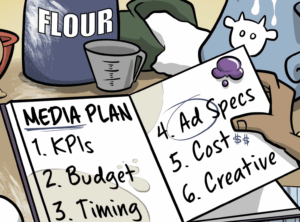
In a traditional RTB setup, advertisers pair their ad creative with their media plan, while allowing programmatic rules to manage delivery to desired audiences. The ad content must adhere to standards in size, file weight and functionality in order to purchase against available media at meaningful scale. In the current scenario, the advertiser provides both the content and, by using a standardized format, the way by which publishers can automatically place that content.
In a native advertising programmatic setup, an ad’s content and formatting are decoupled. A bundle of content and its accompanying media can be associated with an advertiser’s media plan, and the matter of assembling a native ad unit left with the sell side. The publisher then digests the content bundle and media plan and automatically assembles an in-feed ad from it. Standardization occurs in the format of the content bundle and the individual publisher’s process for building ads from it.
That’s the way it should be. Who knows better how content fits within the site context than the publisher? The publisher should assume responsibility for creating a format and design consonant with the editorial content that will sit beside the native ad. The advertiser should only be concerned with providing the content and any associated branded media.
Just Relax
This requires a leap of faith for the advertiser. Brands and agencies have always expected the right to final sign-off before the ad creative gets shipped to trading desks, DSPs and exchanges. In a native exchange that enjoys the same scale as banners, advertisers won’t know exactly how their native content will be laid out across hundreds or thousands of sites. Are advertisers ready to loosen their reins here?
It’s not just brands that need to cede control. Publishers do, too. Programmatic means doing away with editorial review of incoming brand content. Rules for acceptable content need to be expanded, but there’s considerable variability within complied rules that might make publishers or their editors uneasy. Maybe that’s a bridge that publishers who’ve signed on for native have already crossed. What about others who’ve resisted? Unless they innovate a new advertising model that works better, they’ll have to capitulate, too.
Paradigm shifts often end up upsetting apple carts. The drive towards native is a necessary one to revive the viability of display advertising, but native also needs the scale of programmatic to give it meaningful heft. Will native exchanges mount a serious challenge to the banner, or will the obstinacy of advertisers and publishers slam the brakes?
Follow Giles Goodwin (@gilesgoodwin), Flite (@flite) and AdExchanger (@adexchanger) on Twitter.