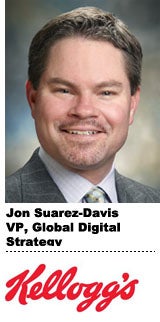
 Kellogg Company is undoubtedly the brand with the most to say about programmatic. And its VP media & digital, Jon Suarez-Davis, carried on that tradition during comments today at the Association of Nation Advertisers’ Media Leadership Conference.
More than half of Kellogg’s online media now traffics through programmatic channels, including both “open exchange” buys and private exchange deals struck directly with media sellers. The latter has been an increasing focus over the last year, with Kellogg doing private exchange buys with “many key publishers.”
Suarez-Davis said the early results are promising. “We’ve done this for almost a year with great success and I think it was one of the biggest moves we made in the last two years,” he said.
Reach has not been the Achilles heal some have made it out to be. “I’m very encouraged with our results on private exchange inventory. We have visibility into duplicate versus unduplicated reach.”
But he said the inventory does cost more. “We do see an increase in our CPM versus open exchanges. It’s about value. If we can get more value via brand awareness or purchase intent,” then it’s worth it.

Kellogg does not work with its agency’s trading desk on programmatic buying (“They remain an important partner”) but licenses directly from DSPs. Suarez-Davis said he has occasionally stood accused by publishers of “diving to the bottom” with its programmatic strategy, essentially trying to drive down prices without regard to inventory quality or brand value.
“There was some chatter in the industry that we were just pushing for a lower CPMs. That’s absolutely false. We were looking for data to help us increase our efficiency and create value,” he said.
But it is true that Kellogg has moved away from the notion of “premium,” often spouted by upmarket media brands. Premium, at least to Kellogg’s marketing organization, has become a dirty word.
“No one has the same definition of premium. We would say that premium inventory is inventory that lifts our brand metrics and ROI. Ironically that could be some of the cheapest CPMs out there,” he said. “We ensure we are in the marketplace, continually optimizing impressions. We’re not really that concerned with premium.”