 If your local advertisers have an advertising budget to spend but nowhere to spend it, why not do it for them?
That’s part of the logic behind reach extension, a tactic that’s long been popular with media companies like newspapers that get much of their budget from local businesses too small to warrant hiring an agency. Local radio station owner Emmis Communications is also getting in on reach extension using technology from Centro.
Emmis operates 22 radio stations in markets like Austin and Los Angeles, according to its website. The media company is white-labeling a DSP from Centro to buy digital advertising programmatically on behalf of its clients, a relationship that began six months ago, though was only revealed in August.
Emmis hopes this digital extension will position it to take advantage of a growing digital advertising market as radio ad revenues trend downward nationally. According to data from local advertising forecaster Borrell, local advertising will grow 13% to $117 billion in 2015. Online will grab 42% of that share.
The move also expands Centro’s relationships with publishers like Emmis. Up until recently, the technology company focused on driving demand to publishers as well as having them participate in its invite-only ad exchange, the Centro Brand Exchange.
But its acquisition of SiteScout in November, which came with DSP technology, enabled it to license out that DSP technology, as Emmis has done, or offer to manage reach extensions for publishers who don’t have or want that capability in-house.

Other publishers using Centro for audience extension include Scripps, McClatchy Co. and Metro.
An early success for Emmis came from a digital extension campaign for a local university in the Los Angeles market.
“We did an all-around integrated campaign,” which included radio ads, events and digital, said Rory Foster, the company’s director of digital. “Our on-air personality was in a display ad. We did extension impressions with the brand and personality in the ads, all reinforcing the same scholarship contest. We ended up with off-the-chart performance.”
The click-through-rate was .46%, compared to a standard of .08%. “That shows the power of the extension,” Foster said.
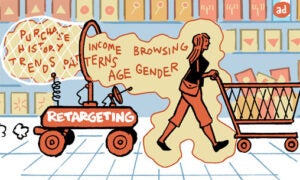
The ability to geotarget and segment audience is a big advantage for local advertisers. In the university campaign, the extension impressions used retargeting and also focused on reaching secondary education seekers, all done through the white-labeled Centro DSP.
“We offer the full gamut from audience targeting to search marketing,” said Centro’s SVP of publisher development, Katie Risch. “In addition to that, if publishers are looking to pull in their first-party data, they can do that through [recent acquisition] SiteScout, and find those people across other exchanges and go out and expand their audience.”
The campaign also underscored what Foster sees as one of the biggest values of using Emmis to do digital extension: its brands. “We’re a media company and with that overhead comes assets like names that have meaning to communities and access to those local communities. We’re amplifying that with technology.”
The budgets for these local advertisers can range from $1,500 a month to upwards of six or seven figures, Foster said. The advertisers usually spend at least that amount on owned-and-operated sites as well. Foster estimated the split between on-site and off-site ads is in the 60-40 range.
Finding talent to buy programmatically for these advertisers is a challenge, but not an insurmountable one.
“Programmatic as a whole has only been around for a few years, and the level of expertise out there in the marketplace is hard to find. We’re lucky with the talent we found, but there’s not a line out the door with people with this skill set,” Foster said.
He also credits Centro with providing training to help his team on board. Centro’s offerings include both the white-label DSP option, which Emmis chose, and the ability to pass off budget directly to Centro. Companies that want to move from handing off budget to managing it themselves are given the path to do so.
“We’re not afraid to get in and work with these publishers who want to work toward self-service,” Risch said.
Foster wants to provide value for the clients he serves. That means avoiding some of the mistakes made by those who offered extension through search engine marketing (SEM).
“What happened with SEM I see as being a potential for programmatic, with companies wanting to show high-dollar sales but not being thoughtful,” Foster said. “There is a lot of wasted effort right now in media companies in going after every possible dollar, no matter the margin or return on dollar. I think that’s the problem with search.”
Emmis takes a fee for the media it places. For that, Foster said he thinks long-term: balancing margins with customer satisfaction. “I would rather make less in margin for better-quality inventory and get a lifelong customer.”