“The Sell Sider” is a column written for the sell side of the digital media community.
Today’s column is written by Alessandro De Zanche, an audience and data strategy consultant.
I find brand safety one of the most baffling contradictions of our industry. It often represents the exact opposite situation in which any quality media owner should want to put itself, and it is the most misleading proxy for quality that an advertiser can use.
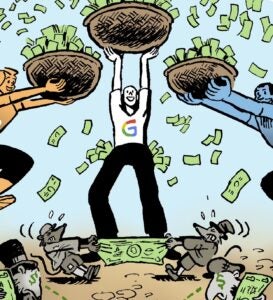
As programmatic RTB grew, quantity gained priority over quality, and everybody fell into the trap. Advertisers pursued a delusional quest for unlimited scale, blinded by the illusion of a perfect cross-device, cross-domain view of the user. Quality media brands dangerously allowed themselves to be thrown into a big bucket with almost every type of inventory, ranging from fake to garbage on up to the top of the premium content pyramid: their own.
As a result, marketers saw their ads run on sites and apps that, at worst, promoted hate speech, terrorism, pedophilia, violence and even harmed the users’ devices, and, at best, alongside very low-quality content and environments with horrible UX.
When these problems surfaced, advertisers should have demanded that the programmatic platforms remove the rubbish at the source, which could have fixed the roots of the issue (but it also would have threatened the potential revenue for ad tech and agencies and the illusion of scale). Instead, advertisers barked without biting and deployed systems to filter out as much of that rubbish as possible, adding further costs to the system.

This created a “lifecycle of rubbish,” flowing in and out by design.
A different outcome
One could think that the introduction of brand safety tools was the point where premium media owners finally won, with their quality inventory highlighted, protected and made available to premium brands. This is where the painful path took a slightly different twist instead.
In addition to the sites or apps that no respectable business would want to be associated with, advertisers started to include in their blacklists terms and topics predominantly focused on current facts and news, such as Trump, Brexit or #MeToo. This practice also existed for decades in print but with a much more reasonable and balanced approach.
These topics are part of perfectly safe and balanced pieces of content when belonging to quality media environments, but in this “brand safety” era they are all to be carefully avoided.
Programmatic RTB triggered a brand safety paranoia, but it’s a paradox: The obsession with brand safety is taken to an extreme, while advertisers willingly join an environment plagued by the worst possible problems in marketing and advertising.
The result is ads from some of the top advertisers often being displayed, by exclusion, on “safe content” like silly polls, competitions or otherwise bland content of little quality and engagement. At the same time, quality media owners complain that a good amount of premium content is automatically filtered out by brand safety algorithms, affecting their revenue.
Avoiding past mistakes
The digital out-of-home (DOOH) corner of the industry now faces many of the same issues that online advertising has had to battle. Hopefully it will learn from these mistakes, although I sense ad tech is jumping in with the same RTB programmatic promises that caused so much pain and commoditized quality media owners.
At a recent DOOH conference I attended, a media owner who specialized in iconic locations displayed two New York City billboards – one near Rockefeller Center and another next to a public bathroom. She worried about what programmatic would do to DOOH, and it represented a powerful allegory for the concept of brand safety in online advertising.
Brand safety is ultimately what allows, almost but not always, an advertiser to stay away from the digital equivalent of that bathroom, which is not the same as proactively choosing a high-quality environment for a brand or a product’s appearances. Achieving brand safety also doesn’t automatically mean appearing on the Rockefeller Center’s digital media equivalent.
There is also the user experience to consider. For 15 of the top 20 UK publishers, for example, brand safety, viewability and verification tags represent 10% of a website’s total weight, on average, causing latency of at least one second, according to data ad tech consultancy RedBud. Most agencies and advertisers also require their own verification tools, causing media owners to add to their pages different tags for different vendors and for different clients.
There is a great opportunity for visionary advertisers and media owners who understand that infinite scale is not only impossible but even counterproductive. There would be enough reach in a media environment that is high quality, walled garden-like, brand safe by nature and user-centric – separate from the programmatic open marketplace and complementary to Google and Facebook.
The industry’s marketing and advertising pitches constantly cite the customer experience at the forefront of their promises, but let’s stop fooling ourselves, our clients and our partners. Where will these experiences take place without a true quality environment?
Follow Alessandro De Zanche (@fastbreakdgtl) and AdExchanger (@adexchanger) on Twitter.