 When people sign up for sweepstakes, they leave the right address.
Publishers Clearing House’s (PCH) Liquid division was acquired in 2012 and uses its parent’s deterministic data sets to power media campaigns.
This value prop is becoming more attractive as agency trading desks move to buying through private marketplaces and evaluating success through benchmarks like on-target delivery.
The Mindshare Trading Desk started working with PCH late last year and set up a PMP in March to access PCH’s unique audiences – many of whom visit the publisher’s casual gaming sites.
The agency trading desk prefers private marketplaces because they provide access to unique inventory and cut down on fraud, while also improving viewability. “We see higher viewability metrics and performance on PMP inventory versus the open exchange,” said Michael Dombek, manager of the Mindshare Trading Desk.
“We look for publishers that rank highly in comScore against the demo target, and if the content on the page resonates with the demographic,” Dombek said.
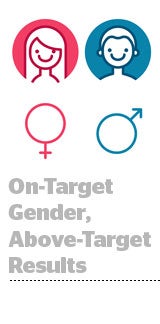
And because PCH layers on age and gender from its first-party data, it is a top performer for one of Mindshare Trading Desk’s new KPIs: on-target delivery, as measured by Nielsen Digital Ad Ratings.

“Once they start doing analysis on how accurate we are against the demo, all of a sudden we are sexy as a publisher,” said Tom Anderson, head of programmatic at Liquid.
Private marketplaces have grown 350% over the past year, Anderson said. To further drive results, it’s implementing multiple header-bidding partners. Private marketplaces will run through the header, getting a chance to bid on every matching impression.
The publisher, which Anderson said just moved beyond basic targeting in the past year or so, has larger aspirations.
One is turning audience extension from a managed service to a data licensing model.
When buyers want to use PCH’s data to inform their buys elsewhere on the web, PCH must do the buying. But many agency trading desks prefer doing it themselves. In the future, Anderson expects to be able to execute reach extension deals through a private marketplace-style setup, a capability that SSPs haven’t built yet.
PCH’s data also has a depth that hasn’t been fully tapped yet. When Anderson joined PCH after it acquired his mobile DSP Plethora Mobile in 2014, he began connecting the pipes needed to activate PCH’s data for media companies.
PCH has 110 million profiles that reflect three-quarters of US households, according to Anderson. The company also has a $1 billion commerce business that extends far beyond its magazine-selling roots. PCH is still testing how brands can leverage its purchase and behavioral data.
“We’ve been a data-first company for a long time,” Anderson said.
But PCH didn’t use that data for media. In the past year, though, that’s changed, Anderson said, thanks to the company’s investments to make its data actionable for media buyers. “Most of the deals we do now have data attached to them,” he said.