Transacting advertising through real-time bidding and other automated methods is gaining ground with publishers and advertisers alike, but questions remain about how to leverage the technology as it continues to change.
The Interactive Advertising Bureau (IAB) gathered executives from Google, CatalystDesk at Condé Nast, and Varick Media Management to hash out these issues with moderator Carl Kalapesi, director of industry initiatives at the IAB.
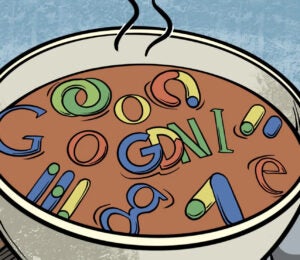
Alanna Gombert, GM of Conde Nast’s CatalystDesk, said a big challenge is simply agreeing on how to describe programmatic technology and services. “There’s a lot of confusion about this space and we still need to find a common lexicon between buyers, sellers, ad tech platforms and data platforms to make a cohesive environment,” she said.
Paul Rostkowski, president of the trading desk Varick Media Management, agreed. “A lot of the technology that’s out there is very similar,” Rostkowski said, “which creates a lot of noise, so we have to be good at helping our clients understand what’s real.”
Bonita Stewart, VP partner of business solutions for the Americas at Google, added that CMOs in particular, need more education on programmatic marketplaces. “The back room is moving into the front room and these conversations are entering the CMO’s world,” Stewart commented. “There has to be an education process with CMOs about things like the differences between a private marketplace versus an open auction. As an industry we have to make sure that we’re driving consistency in the language and not creating more confusion.”

Kalapesi asked Rostkowski if he was seeing more clients approach programmatic trading as a performance or branding mechanism. Rostkowski’s response was that it is “evolving from just the performance side” to “more brands coming in from the data side.” In terms of real-time bidding, Rostkowski continued, “the brands’ primary interest in RTB is being able to apply the first-party data in an auction-based environment and speaking directly with publishers. This was largely on the performance side, but it’s evolving to the brand side with more data and executions.”
Gombert, in contrast, noted that she is seeing a lot of success in selling share of voice deals programmatically. “Shared voices is huge programmatically, especially for luxury clients who are used to buying pages, but now they’re doing it online,” she said. Kalapesi also asked the panel to discuss the challenges that publishers face in optimizing yield from various channels as they begin to sell a wider selection of their inventory programmatically.
Gombert argued that the term “optimizing yield” implies selling from the bottom of the funnel. “You’re optimizing yield and you have that waterfall in place where you’re seeking the sets from the bottom of the barrel to increase your bottom line, but we’re not about 100% fill,” she said. “We don’t sell that way because it becomes an onerous task.” There’s a “conflict in the marketplace,” she added, “between the traditional way of selling in the exchanges and what publishers are trying to achieve in a more transparent, higher CPM world.”
Rostkowski and Stewart emphasized the importance of providing greater transparency into publishers’ inventory to further promote programmatic buying and selling. As for mobile, all three panelists agreed that mobile is rapidly growing in the programmatic space as it leads the way to a cookie-less environment. “A lot of this comes down to device ID, how we can retarget without cookies,” Rostkowski commented. “It’s becoming a more cookie-less environment because of mobile and we know from privacy issues that the cookie may soon be gone.”
In terms of what the next stage should be in the programmatic space, Gombert commented that publishers need more holistic solutions. “We have lots of awesome vendors, but if there’s say, a different ad server for each solution, there’s just more fragmentation,” she said. “We also need to solve the data wars. Each DMP is not integrated with the others, so if one person’s data is here, how do you talk to this person’s data over there?”
And to make publishers more comfortable about selling their inventory programmatically, Stewart noted, “agencies are absolutely critical in terms of helping with the rules of engagement. They [agencies] sit in the middle in working with the advertiser and the technology companies so I think agencies can help in laying out the workflow and moving more inventory through the pipelines faster.”
Towards the end of the discussion, all three panelists burst into laughter when an attendee asked, “will programmatic create shorter payment times for publishers from networks?” The answer is no, according to Gombert. “Certain agencies, Gombert said, “are asking publishers for direct agreements to do billing between agency A and publisher B and that creates a longer review time.”