

 Sometimes Mihkel Jäätma has to break some hearts.
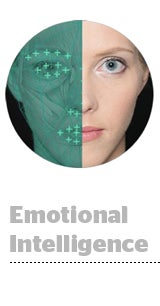
Jäätma is CEO of Realeyes, a London-based company that uses so-called “emotional analytics” to measure subconscious responses via webcam to video content based on four key metrics: attention, retention, engagement and impact. The process is conducted with opted-in panels, and videos are scored on a scale from one to 10, with one representing a yawn-fest with no chance of being shared and 10 denoting a highly engaging piece of content.
Clients include AOL, Coca-Cola, Diageo, Ford, Heineken, Honda, IKEA, Kraft, McDonald’s, Nestlé, P&G, Samsung and Disney, all of whom came to Realeyes to test the viability of their video content and decide where to invest their video dollars. Realeyes also works with several agencies to help with media planning and targeting.
Often, a brand will approach Realeyes to test an expensive, already finished TV ad to see how it’ll perform online – only to find it clocks in at a two or a three on the engagement scale. That’s not what a brand wants to hear about its highly polished TV work.
“But if you’re going to win online, you have to capture attention, and attention is opt-in, as opposed to television. But even pre-roll ads are forced exposure,” Jäätma said. “Brands look at their metrics, potentially huge reach numbers, and they think that represents success, but reach doesn’t mean that people are engaging. They probably don’t even notice those ads.”

To help brands get a better sense of what will actually engage their audiences, Realeyes conducts what Jäätma referred to as a “next-gen survey.”
Rather than bringing subjects into a research facility to screen content and having technicians manually determine their emotional responses, Realeyes has relationships with about 20 different market research companies with access to online and mobile panels around the world.
Participants are sent a link to the video being tested. Their facial expressions are recorded through the webcam on their PC or the camera in their mobile device. The Realeyes algorithm is programmed based off the Facial Action Coding System, a taxonomy of six universal cross-cultural emotional states developed by psychologists in the 1970s: happiness, surprise, sadness, disgust, fear and confusion.
In a recent project for Heineken, Realeyes helped the brand and its media partner AOL test and collect emotional feedback from the 11 videos in its Wieden+Kennedy-created “Dropped” video reality web series, which followed regular people as they were sent to remote locales around the world and given bizarre assignments to complete. In one case, a guy from South Africa was blindfolded and dropped out of an airplane near the Polish border, where he then had to arrange a Berlin-style circus show.
Using its emotional scoring system, Realeyes analyzed how longer two-minute cuts of the “Dropped” content tested against shorter 30-second trailers with about 4,200 viewers across Spain, Australia and the United States. Turns out the longer pieces scored higher on the emo scale than the trailers, driving 2X greater CTR and 3X more social actions. AOL used that info to redirect its media budget accordingly.
 Realeyes has analyzed thousands of online videos with hundreds of thousands of people over the last several years, storing the fruits of its algorithm’s labor in a massive database. That information is connected with the number of times each particular video was shared, tweeted or organically viewed and then fed into a second algorithm that predicts how well a video will do on social media based on emotional reaction with about 80% accuracy, according to Jäätma.
It’s a fairly high success rate, but Jäätma and his team of Ph.D.s and mathematicians are looking to do better.
In mid-April, the company accepted a €3.6 million grant from the European Commission to work with researchers from Imperial College London on a project to use automation to better quantify the link between likeability and the web of emotions that influence outcome. The grant is part of Horizon 2020, an EU-funded scheme designed to encourage European competitiveness that plans to disburse about €80 billion by the year 2020.
In addition to its shared grant from the European Commision, Realeyes, which has a headcount of 40 and additional offices in Boston and Budapest, has also had some more traditional funding events in the past, totaling about $10 million.







