“On TV And Video” is a column exploring opportunities and challenges in programmatic TV and video.
Today’s column is written by Bryan Noguchi, senior vice president and media director at R2C Group.
Video content viewership has long been converging, with the content we watch on TV, a device or OTT platform becoming the same content. This means that as consumers, the distinction between our TV viewing and our “digital video” viewing will soon disappear.
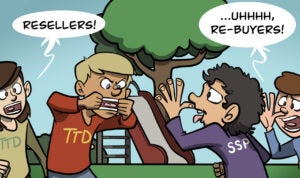
But during Advertising Week last month in New York, the purveyors and buyers of video inventory seemed to be growing apart from their traditional counterparts and perhaps siloing themselves. So while the market converges, the marketplace is diverging.
If you listen closely to recent panels about inventory quality in programmatic video, most of the language used on stage – by digital and programmatic media buyers and, truth be told, me! – is markedly different from the language used by television buyers and planners. The two are so different that I’m pretty sure agency media teams would not have understood much of what was being discussed. Conversely, I’m nearly certain that many of the panelists on stage at Advertising Week would not be particularly conversant in the language of agency TV buyers.

The Language Of Technology
There’s a smug certainty in media technology circles that tends to outwardly manifest itself in very jargon-y conversations about the stack, third-party overlays and API implementations. While precision of language is exactly what’s needed as the worlds of traditional and digital video and TV start to converge, the conversations originating on the digital side are decidedly technical in nature – and they sound less and less like media discussions to media practitioners.
This is because the evolutionary end game is that all of this media will ultimately be managed programmatically, via technology, so it makes sense. Everyone from the traditional side needs to get comfortable with the language shift.
Having said that, I’m also convinced that the march towards mechanized optimization is a race-to-the-bottom dead end that not only carries a lot of potential to undercut the benefits of having agencies and professional media people in the marketing mix, but also significantly and dangerously devalues the content audiences engage with and consume.
With the advent of digital ad blocking, the industry is headed into perfect-storm territory, where neither the consumer nor the advertiser fully understands what that content is actually worth. This disconnect has effectively broken the understood value exchange between an advertiser and its audience.
The Notion Of Connection
Neither traditional nor digital media professionals tend to describe the notion of connection very well. For whatever reason, they don’t seem to have the words to characterize the value inherent in the relationship between a given audience and the programming it’s watching.
Media buyers, planners and sellers are increasingly mired in the technicalities of what we do and how we do it. We end up discussing reach or efficiency or completions as loose proxies for engagement or affinity. We rely upon the likes of Dynamic Logic or Vizu to measure upper-funnel performance, or a Convertro or Adometry for multitouch attribution. Yet engagement and affinity are exactly what we should be brokering in, and where our industry has failed our clients. We have not done as good a job of establishing and assigning quantifiable value to these metrics as we have, rightly or wrongly, to other metrics, including clicks, visits or GRPs.
The byproduct of this is that audience interaction with content gets lost and the context of marketers’ messaging is subordinated in favor or harder metrics. We have become victims of the efficacy of our own technology: Advertisers can reach exactly who they want and even see if viewers finished or abandoned the ads, but they tend to ignore the context of that exposure and hesitate to innovate against what they might be able to achieve within it.
Connection, engagement and impact are the hallmarks of strong video content, and this is the objective language agencies should be using in conjunction with our digital and traditional vocabularies to describe the value of advertising within the context of these media.
Bridging The Gaps
There’s an argument to be made that traditional media professionals need to adapt or die, that the language of digital will ultimately prevail.
While I could argue the timeline, I’m prepared to concede that this is probably true. If media agencies haven’t started, I’d say it’s time to expose traditional media planning and buying teams to digital. But as the language evolves, it’s important to bring audiences back into the discussion to find the middle ground between what they want and what they will tolerate. Neither of these poles is acceptable to me because both positions undermine the concept of advertising as a value exchange.
So, here we are. I have three groups that have a lot to gain from each other who are instead beginning to polarize from one another: Digital is pulling away from traditional media disciplines, while audiences are recoiling from the advertisers represented by both digital and traditional media groups. The future of advertisers, marketers and consumers of quality content will hinge on the industry’s ability to unify all three.
Follow R2C Group (@r2cgroup) and AdExchanger (@adexchanger) on Twitter.