
“On TV And Video” is a column exploring opportunities and challenges in advanced TV and video.
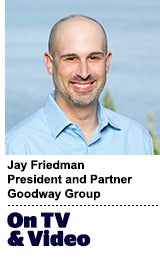
Today’s column is written by Jay Friedman, president and partner at Goodway Group.
Buying connected TV ad inventory is fragmented at best and complex at its worst.
Channels we are familiar with from the corded TV days – TLC, HGTV, Bravo and Fox News, among others – have their own streaming channels, services and apps. A new breed of channels – Tubi, Pluto, Crackle, Newsy and Crunchyroll, to name a few – have also built sizable audiences and must be considered. Even if we knew the channel(s) we wanted to buy, we also need to consider their streaming services. Sling, DirecTV Now, PlayStation Vue, Philo and others sell ad time of their own against many of these same channels.
Fragmentation and complexity are typically solved through consolidation or a technological layer. This will come but isn’t here yet in advanced TV. One aspect of buying media that hasn’t ever been overcome is our cognitive biases when planning, buying or approving media plans.

Everyone is prone to cognitive bias, and media buyers, marketers and even CMOs are no different. Whether it’s in-group bias (my target audience can’t be that different from me), projection bias (everyone must watch shows at least somewhat similarly to me) or the recency effect (I just watched Hulu last night, so I should look at advertising with them), my guess is that lesser-known channels and vMVPDs are not getting their fair share, and that is costing them money and potential upside in ROI.
Beyond cognitive biases, buying across lesser-known channels and platforms also means taking more rep meetings, analyzing more data and providing additional client POVs, for which many agencies do not have lots of free time. But what if there were a fairly simple way to get closer to “right” without spending much more time or effort?
As I speak to marketers and media buyers throughout the country, I find many still buying advanced TV through IOs on a demographic basis. When this is the case, “time-consuming” is just one of the not-so-nice ways to describe that process. Audience-based buying has become the core of programmatic strategies, and rightfully so. An audience-based buy using proven first-, second- and third-party audiences will typically outperform any other targeting method, especially when using multitouch.
Audience-based buys help a brand ensure they hit the right people at the right frequency while minimizing waste. With a good demand-side platform (DSP), data management platform (DMP), agency partner and a reasonable budget, there is no reason a brand can’t buy very deep into a channel or service provider list through a simple RFP process.
The typical RFP process of “Hey, vendor, give us amazing original thinking and maybe we’ll give you $25,000 next time” may be viewed by agencies as a way to take work off their plates and kick it over to vendors. With audience-based buying, this is actually a waste of time. Getting an audience in a DMP and asking 100 channels and streaming services to provide their match numbers, forecasted inventory and rates is easier on both the vendors and the agency. It avoids 100-line spreadsheets and back and forth emails, too.
Using a good advanced TV DSP, the agency can allocate that spend appropriately based on forecasted inventory and projected ROI using the provided or pre-negotiated rates. If it’s an untested or unproven channel, the agency can evaluate the content and determine if starting small is the right way to go. That takes time, but if a channel I’ve never watched matches up better with the audience I’m planning for than other well-known channels, I better pay attention and let my biases go.
For nearly 70 years we as an industry have been buying TV based almost exclusively on relationships, personal feelings about a channel or program and a sparse panel-based survey. We now have the opportunity to change that.
This opportunity rewards those who create great content. It also rewards those with the right audiences. And it’s easier on agencies, brands and vendors. Now all we need to do is overturn 70 years of habit.
Follow Jay Friedman (@jaymfriedman) and AdExchanger (@adexchanger) on Twitter.







