

 Adobe Analytics and personalization engine Adobe Target can now be consumed as a combo meal.
The company said Wednesday that it has integrated the two solutions, also available as separate entities within the Adobe Marketing Cloud, into a single UI to help clients handle what Adobe’s VP of mobile, Matt Asay, called “the mobile problem.”
“Whether you’re a mobile-first company like Uber or a more traditional enterprise like Safeway or Morgan Stanley, it’s still too hard for enterprises to engage with customers on mobile devices,” Asay said.
Post-install engagement is a particularly tough nut to crack. Movie and game rental company Redbox, an Adobe client taking advantage of the integrated solution, knows what that’s like.
The Redbox app, which, among other things, allows users to browse and reserve flicks for pickup at one of roughly 40,000 physical kiosks located across the US, had been downloaded roughly 30 million times as of June. Keeping those users active takes diligence.
“One of the biggest challenges for mobile marketers is engagement and retention,” said Mike DiMiele, an analytics and digital marketing manager at Redbox. “The landscape is increasingly crowded, and we are vying for consumer attention.”

In combining app analytics with targeting and optimization, Adobe wanted to streamline the constant iteration necessary to encourage in-app engagement, Asay said.
Marketers can develop segments and run A/B tests within the combined UI to assess the most appropriate form of messaging and determine the best time to reach out. From there, it’s a matter of optimizing or “turning the knobs,” Asay said.
Redbox took advantage of that functionality with its push messaging initiative. Having settled on push, Redbox noted that engaging with customers at 9 a.m. resulted in a doubling of its baseline rental numbers within the first hour of sending out a message.
The company also tapped Adobe Target to figure out the optimal time to roll out its welcome series, the group of messages Redbox sends to engage new users immediately after download. After running tests, Redbox determined that promotional offers, a coupon for a free rental, for example, were most effective, ultimately driving a 56% open rate across Android and iOS.
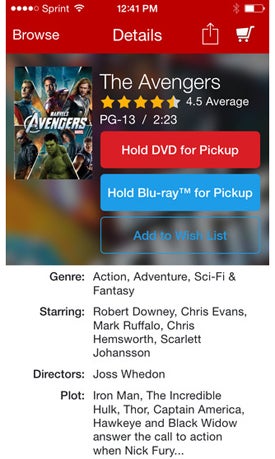 All of Redbox’s KPIs are geared toward encouraging a symbiosis between in-app behavior and actions in the physical world, aka browsing the latest/upcoming releases in the app as a step toward reserving a video or game via the app for kiosk pickup.
“All of this money is poured into user acquisition, but once you’ve got the users, you need to know what those users are doing in an app,” Asay said. “Most people who download an app use it once and then never use it again. Often, they either delete it or it sits on the third or fourth screen in their app graveyard. That’s what we’re trying to fix.”
The integrated mobile offering, which is now generally available, includes access to app analytics around user acquisition, downloads, revenue, ranking and app store ratings; app optimization and personalization and multivariate testing functionality; mobile messaging; and the ability to send location-based targeted push and in-app content via beacons. Adobe added beacon support to its analytics application in October.
Although several thousand marketers use components of Adobe Marketing Cloud as isolated products, only several dozen are using the unified toolset thus far. The hope, Asay said, is that existing Adobe customers will find utility in the combined solution.







