

 TV viewership is fragmenting faster than the advertising industry’s ability to adapt to it all.
And advertisers bracing for the 2017 upfront season aren’t entirely satisfied with the big measurement companies. Consider Nielsen’s delayed Total Content Ratings product and comScore’s accounting snafu and anticipated delisting.
“People are in dispute about what the measurement process should be,” said Rino Scanzoni, CEO of WPP’s Midas Exchange and its advanced TV unit, Modi Media, at CIMM’s Cross-Platform Media Measurement and Data Summit on Thursday. “Total Content Ratings was going to be that first stage, but now it’s off the board.”
GroupM is pushing for a new commercial metric that comprehensively accounts for long-form viewing across a broader array of devices.
Scanzoni, who was responsible for negotiating billions in TV ad spend yearly on behalf of clients in his former role as chief investment officer of GroupM, said the industry-standard C3 rating – a measure of live and DVRed commercials viewed within three days of original airing – is not good enough anymore.

“Now, things are even more complex with the same content running on desktop, smartphones, smart TVs,” he said.
C3 has served its purpose, Scanzoni said, but the industry needs a metric that aggregates audience viewing within a seven-day window across devices. GroupM is working with broadcasters, vendors and both Nielsen and comScore on a “framework” for a new multiplatform ad metric.
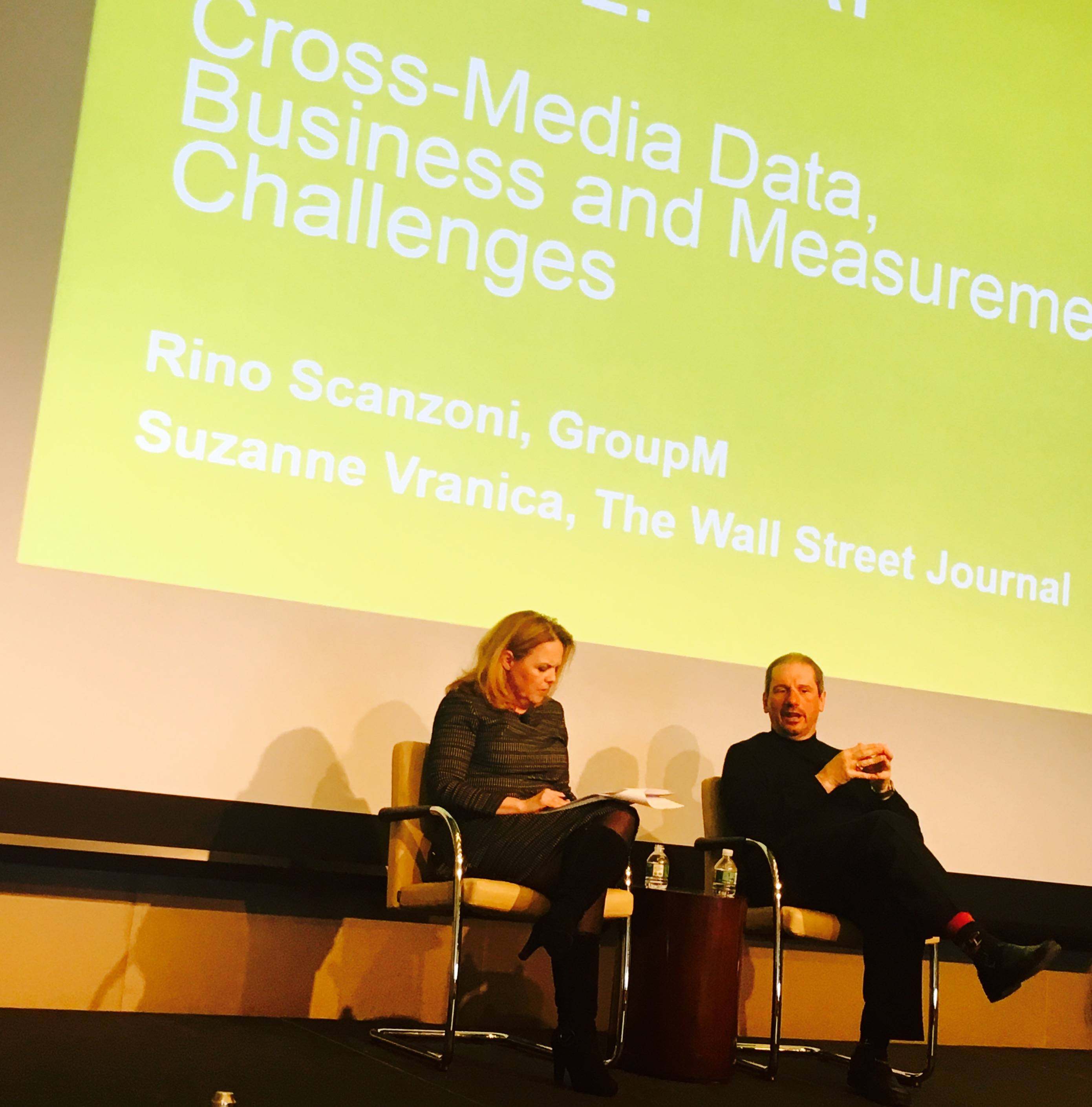 And GroupM also is working with content and measurement providers to figure out practicalities like how to watermark content so it can be measured and how to manage commercial loads across devices.
Television has traditionally been transacted based on content ratings and demographics, while digital is usually evaluated based on audience – so an ideal cross-platform rating would somehow roll up both.
While some individual broadcasters add data to linear inventory and price on audience guarantees, that’s still the exception.
And simply too many media owners and vendors are conducting separate data deals, Scanzoni said.
“The idea that agencies and advertisers are going to conduct different data deals by different vendors’ standards is not realistic,” he said. “There’s too much, ‘Let’s try to sell our own proprietary product in the industry.’”







