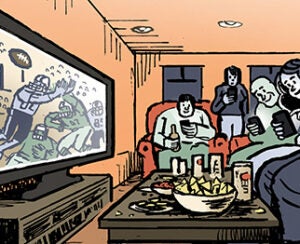
The emergence of data-enabled TV targeting is altering the agency buying structure.
In 2014, WPP’s GroupM launched Modi Media, a unit that would become the poster child for so-called “advanced” TV ad buying.
But it’s not the only agency group to build an offering geared to the fragmenting milieu of TV advertising. Others, such as Starcom, Dentsu and Horizon Media, have joined the race.
Within these agencies’ centers of excellence, there are many activation points, ranging from addressable to programmatic and connected TV.
Publicis Groupe
Publicis Groupe-owned Starcom MediaVest Group (SMG) has 15 people working in its “Precision Video Center of Excellence,” a group it has groomed for about a decade.
Like GroupM’s Modi, which formed a long-term addressable TV relationship with Cablevision on Wednesday, SMG’s addressable division strikes deals with marketplace supply partners.
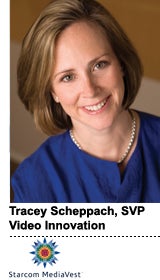
“When we go to place addressable buys with DirecTV, DISH, Comcast or Cablevision, we’re the ones who do it,” said Tracey Scheppach, EVP of precision video for SMG.
SMG’s precision video division typically does not deal directly with clients, but rather purchases addressable TV in a support role to SMG account teams and other Publicis agencies such as ZenithOptimedia.
“Addressable [TV] requires very sophisticated negotiation and we do work with over 12 technical and data partners,” Scheppach added. “That’s why we invest in 15 people who collectively have over 50 years of experience in advanced TV. Eventually everyone will need to know how to buy this way in the organization because it’s the future. But right now it’s a balance of centralizing until you have that standardization.”

 Dentsu Aegis
Patrick Rubin had only recently graduated college, in 2008, when he became an assistant buyer on the national broadcast team at Dentsu Aegis-owned media agency Carat. In that role, he first began to explore video activation in a screen-agnostic manner.
“I was for some time managing TV, online video and display all in one, and it created an opportunity here [at Dentsu] to shape a greater role for advanced TV,” he recalled. “We saw the market was moving toward a structure which favored data and technology that drove better business results for clients.”
Over time, unique specialties emerged– such as addressable, connected, cross-screen and programmatic – uniting discrete toolkits and strategies.
As these skill sets spread through the Dentsu Aegis Network, the group sought to leverage them more widely across its 120-person media investment group. Rubin took on the role of director of advanced TV strategy and investment at Dentsu at the beginning of 2014.
Dentsu doesn’t divorce video and TV planning from investment and strategy, which Rubin says differentiates it from other holding groups.
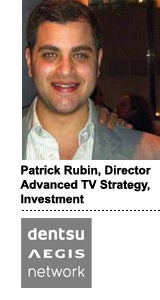 “Within our investment teams, there are folks who would activate and manage connected TV campaigns,” Rubin said. “We’ve been able to win when we’ve brought our investment team upstream [and there’s] close collaboration [with] performance and activation.”
Similarly, independent media agency Horizon saw an opportunity to craft a unit to dedicated to advanced TV in late July, called HorizonAdvanced.
Its intent was to support innovation in programmatic, addressable and data-enabled television while test-driving new technologies to benefit client campaigns.
Horizon Media
HorizonAdvanced is embedded within Horizon’s 50-person national TV team, according to David Campanelli, SVP and director of national broadcast for Horizon Media.
“We have six or seven people who are responsible for vetting new data opportunities, figuring out areas we should be executing five years from now and disseminating that information throughout the entire TV team,” Campanelli said.
When a GEICO or Burger King buyer within that group, for instance, executes an addressable campaign, it’s not outsourced to the advanced TV team. 
“That buyer would work hand in hand with people on the advanced TV team, who act more like consultants throughout the process,” he said. “The biggest thing we’re focused on with that group is developing tools proprietary to Horizon that meet clients’ needs and allow us to be more in control of data application instead of relying on third parties.”
A Difference In Skill Sets
While advanced TV at this early stage is still a largely centralized function within some holding companies, that does not invalidate the need for unique pockets of expertise across agency teams.
“There will certainly be folks who have more direct conversations with media owners and publishers around content, context and sponsorship-driven deals –folks who love the negotiation aspect and publisher development,” Dentsu’s Rubin said. “Then, you will have the operators of platforms. Everyone’s role will morph a little bit.”
Ultimately, advanced TV buyers must support the client’s marketing goals, as executed across channels.
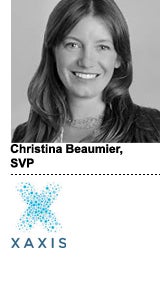 According to Christina Beaumier, who leads internal media buying for WPP Group-owned programmatic platform Xaxis, emerging TV buying methods only increase the need to converge buys on the back end using data and technology.
“Today, you can buy across broadcast television, connected TV and video, but sometimes those things are separate and siloed,” she said. “Yes, we’re focused on making the value of Xaxis a reality in the connected TV environment, but we’re really looking at this now as an omnichannel approach – stitching it all together and measuring not just for completion and click-through, but did a person show up in store?”