 In a sign that programmatic video buying is becoming more essential, IPG’s Magna Global has chosen video ad marketplace operator Adap.tv as its preferred partner. The deal comes a day after cereal marketer Kellogg turned to BrightRoll to help spearhead its programmatic video plans.
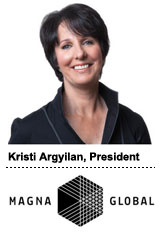
Magna, which is the research and buying arm for the IPG Mediabrands umbrella agency unit, is quick to note the deal is not exclusive and that the company still works with most of the established video ad tech. Magna North America President Kristi Argyilan said the deal has been in the works for more than a year – a sign of how complex it is to strike these kinds of arrangements – and so has nothing to do with AOL, which last week acquired Adap.tv for $405 million.
“It pre-dates AOL and does not involve them – other than that they are also valued partners of ours, and clearly we share some of the same values and vision for where the industry is headed,” Argyilan said.

For the longest time, media buyers have complained about the lack of “premium video” available online for brand marketers. But in the last year, such grumbling has ebbed as video consumption and addressability have increased, and advertisers have gotten more comfortable.
Adap.tv will connect to Magna’s Audience Measurement Platform, which operates like its in-house data management platform as part of its Cadreon trading desk.
In terms of why Magna turned to Adap.tv, as opposed to other marketplaces like Videology or BrightRoll, the reason was mostly likely its promise of matching its reach with clear controls for the agency.
Adap.tv often ranks number five in comScore’s Video Metrix in terms of streams, behind YouTube, BrightRoll, Hulu and video supply side platform LiveRail. Still, its recent growth – 117% year-over-year, according to comScore – has been huge. In contrast, both Hulu and YouTube are down somewhat. Adap.tv also tends to rank about second or third in terms of unique monthly users. Still, the reach and uniques are nothing if buyers lack a clear choice of where to run video ads.
Major publishers like Time Magazine, The New York Times, The Washington Post, Gannett and others are ramping up their video production. Many of them claim their inventory is sold out or that they still rely on limited sponsorships. Over time, however, as inventory expands, programmatic will become a bigger part of their sales programs. For the moment, the big winner in these deals is likely to be Google’s YouTube, which remains by far the largest video operator and has the most traffic.
For the major publishers, programmatic video remains an incremental part of their ad strategy – a subset of a subset. But it represents a quickly expanding area for those same sites.
“While online video ad exchanges continue to grow, the online video market remains largely driven by ads placed directly on major media websites,” said Peter Stabler, a Wells Fargo analyst, in a recent research note. Citing stats from video ad management platform Vindico, Stabler noted that roughly 65% of impressions were placed directly on sites owned by traditional media outlets (CNN, Hulu, The New York Times) and Internet brands such as Yahoo and YouTube.
With that in mind, expect programmatic players like Adap.tv and BrightRoll to announce more “special deals” as agencies and marketers refine their video strategies.
For Kellogg, the choice of BrightRoll as its main shepherd through the programmatic video market is predicated on proving higher completion rates, targeting accuracy and, naturally, how much they can lower eCPMs.