
How AudienceMix Is Mixing Up The Data Sales Business
AudienceMix, a new curation startup, aims to make it more cost effective to mix and match different audience segments using only the data brands need to execute their campaigns.

AudienceMix, a new curation startup, aims to make it more cost effective to mix and match different audience segments using only the data brands need to execute their campaigns.

Is TJX recession proof?; Amazon is blocking OpenAI; and Meta is in hot water with the US Senate.
The Trade Desk gets insistent with Korai again; the EU is rethinking hashed IDS; and is the AI industry becoming a cartel?

The publisher-focused DOJ v. Google ad tech antitrust trial is finished. A judge will now decide the fate of Google’s sell-side ad tech business.

With privacy under unprecedented attack by data brokers and social media, it is the wrong time to weaken CIPA’s private right of action protections, as has been proposed in California Senate Bill 690.
Google recently settled a class-action lawsuit by agreeing to create an off-switch for data sharing in bid requests. Huge deal, right? So why isn’t anyone talking about it?

The phrase “caution is key” has become a totem of the new age in US antitrust regulation. It was cited this week by both the DOJ and Google in support of opposing views on a possible divestiture of Google’s sell-side ad exchange.
ID5 bought TrueData mainly to tackle what ID5 CEO Mathieu Roche calls the “massive fragmentation” of digital identity, which is a problem on the user side and the provider side.
It’s not that people don’t care about their privacy – they do. The problem is that protecting it is often difficult, inconvenient and confusing.

Publishers, brands and agencies today are navigating a new landscape. With rising consumer expectations and evolving regulations, delivering personalized campaigns requires a fresh approach.

As privacy rules tighten, M&C Saatchi built OneView to help marketers measure performance without relying on cookies or user-level data.
The remedies phase of the Google antitrust trial concluded last week. And after 11 days in the courtroom, there is a clearer sense of where Judge Leonie Brinkema is focused on, and how that might influence what remedies she put in place.

The fate of the open web will be decided on who controls the data that drives monetization and the AI that determines distribution. Google controls both, and proposed remedies to its ad tech monopoly do not address this imbalance.
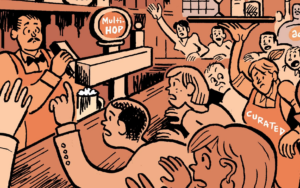
American publishers are hamstrung by antitrust law; should marketers lean into ragebait?; and Pexplexity is hitting pause on its ads business.

Publishers must coalesce to gain a credible bargaining position and stop the bleeding caused by AI search. From there, we must put the processes in place to actually operate a licensing mechanism.

The Trade Desk is facing class-action lawsuits claiming its “privacy-safe” Unified ID 2.0 is really just repackaged cookie tracking.

Law firms are targeting marketers for class action suits; Discord is trying to go mainstream; and ICE’s media presence is getting unavoidable.

Alvaro Bedoya shared his qualms with digital advertising’s more controversial targeting tactics and how kids use gen AI and social media.

Live from New York at Programmatic IO, the AdExchanger editorial team debriefs what ad tech’s brightest minds are saying and doing around AI and measurement.
Where the DOJ v. Google ad tech antitrust trial stands after one week’s worth of remedies arguments.
Will Google need to spin off its ad exchange and ad server? Court is in session in Virgina, with the DOJ and Google advocating for completely different remedies to Google’s sell-side ad tech monopoly.
Day Two of the remedies phase of the Google ad tech antitrust trial was a grueling back-and-forth about the future of Google Ad Manager.

Court is back in session. And the fate of the open internet is in the balance.

Kimmel’s back, baybee; would ads make Wikipedia better, actually?; and Amazon gets accused of dark patterns.

Privacy isn’t black-and-white, says the FTC’s Chris Mufarrige, promising evidence-driven consumer protection cases under the Trump administration.
The Google trial remedy phase is about to begin; not all of YouTube’s AI plans are hitting; and The Trade Desk’s Kokai pitch decks leave something to be desired.
Advertising using AI-doctored images could spark legal issues if the images are misleading. Plus: the commerce reckoning.
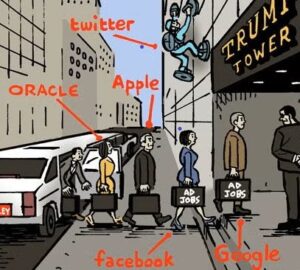
Jimmy Kimmel Live has been suspended due to comments on Charlie Kirk; Samsung is bringing ads to your fridge; and TTD eliminates the Programmatic Table.

Rather than sharing universal TIDs that any DSP or curator can access, Raptive says publishers should instead share encrypted TIDs with an encryption key provided only to trusted demand-side partners.
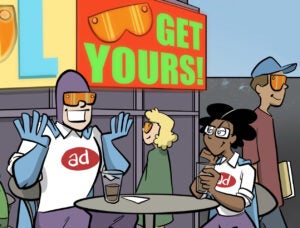
Clear Channel will provide advertisers weekly, mid-flight reports on outcomes driven by its inventory in order to bring OOH measurement closer to the speed of digital.
Opal launched Gem, a new AI solution, to help large brands unify the layers of media and tech within their organizations.

Mula’s AI native content feed helps On3 keep its engagement and RPS consistent amid traffic drop-offs to publisher sites and the growing scarcity of online attention.

Hearst is stitching together its far‑flung news properties into a single programmatic marketplace to simplify buying local news and shore up its business as the ad market shifts.


There’s MMM and MTA, but no single ad measurement works for brands with multiple points of sale. On Tuesday, Northbeam launched an incrementality tool to complete what it calls “the trifecta of digital attribution.”

If you want to know what privacy regulators think about online advertising, it’s not a mystery. Just listen to what they’re saying.

The effect wasn’t just limited to news content. The Reuters.com/lifestyle vertical also had some of its brand-suitable pages blocked.