


“South Park” has been in the news recently for multiple reasons.
Warner Bros. Discovery is suing Paramount over the streaming rights for “South Park.”
And Meghan and Harry were said to be suing the show’s creators, Matt Stone and Trey Parker, over an episode that aired in mid-February entitled “Worldwide Privacy Tour,” in which two characters with a strong resemblance to the former royals go on a publicity tour to demand their privacy. (Meghan and Harry denied the lawsuit rumor.)
But that’s not the topic of this newsletter.
I’ve heard people say that there’s a Simpsons reference for every occasion. I posit that the same could be said of “South Park.”

“Why won’t it read?!?”
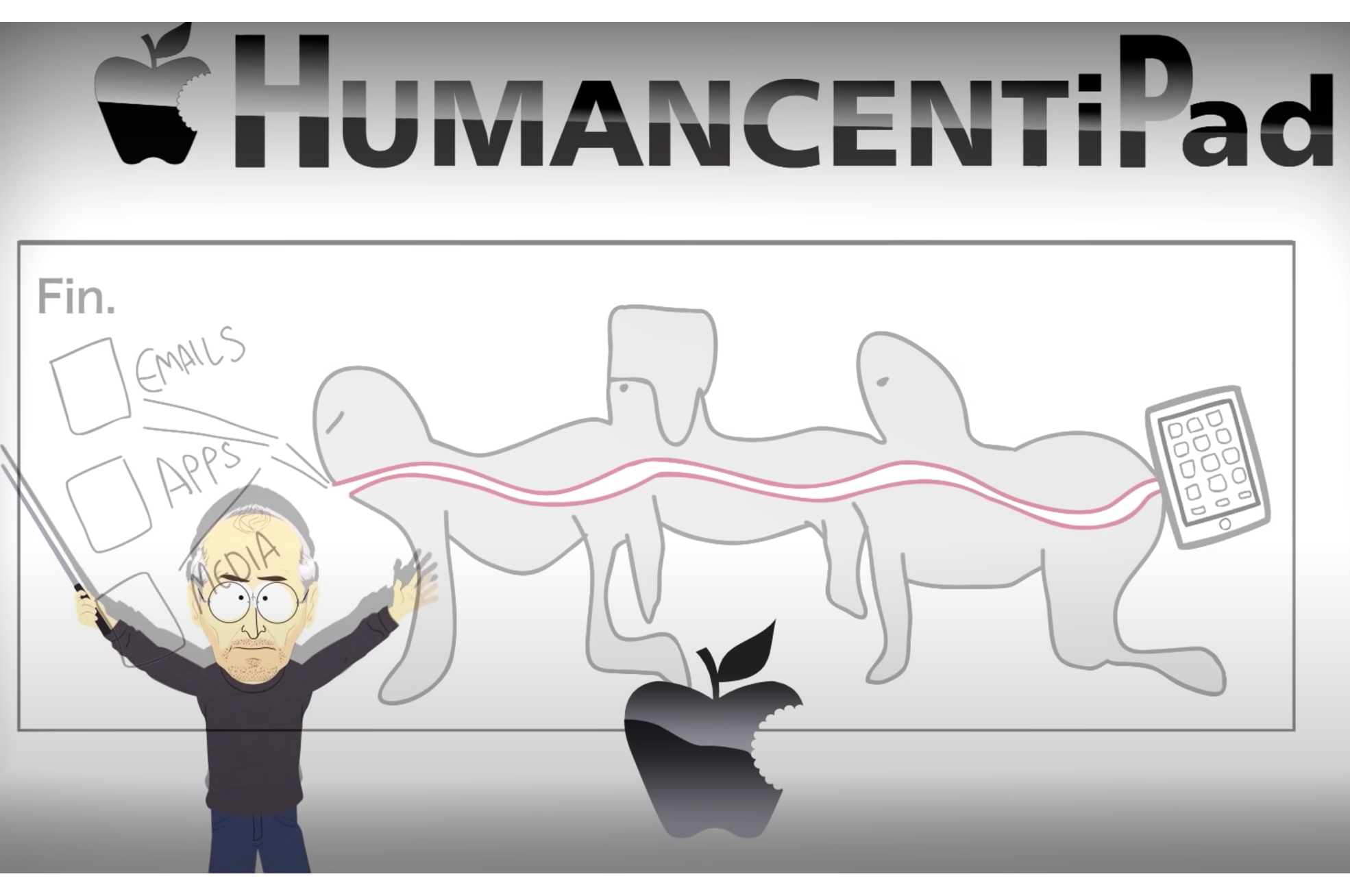
I want to talk about an old episode of “South Park” from 2011 called “HUMANCENTiPAD,” in which Kyle carelessly agrees to the iTunes terms and conditions without reading them, and in so doing unwittingly gives Steve Jobs permission to rope him into an unholy experiment. (You can just watch this clip. It’s … hard to describe.) 🍎 💩
Despite getting burned, Kyle continues to sign agreements without reading them, which flummoxes Jobs, who periodically cries out in frustration, “Why won’t it read?!?”
The point of the episode is this: If we don’t read the fine print before signing a contract, we might regret it later.
By the same token, however, it’s unreasonable to expect the average person to read every user agreement and privacy policy megillah they’re presented with – and this would be the case even if these agreements and policies weren’t long, confusing and vaguely worded. 😕
Notice and choice (not so much)
In other words, show me someone who actually reads privacy policies and I will show you … a privacy lawyer. Most regular people don’t bother – and it’s not their fault.
Requiring them to regularly dive into and digest thousands of words of legalese is unreasonable. This is why the notice and choice principle, which has been the online ad industry’s go-to fig leaf for well over two decades, is coming under fire.
The Federal Trade Commission has been wary of notice and choice for years, and still is.
As Commissioner Kelly Slaughter put it recently in a statement about the FTC’s advanced notice of proposed rulemaking, “The prevailing notice and choice regime has failed to protect users, and the modes by which sensitive information can be discovered, derived and disclosed have only grown in number and complexity.”
POV on ATT
Back to Apple.
Apple gets a lot of flak from certain sectors for its AppTrackingTransparency framework and the havoc it’s been wreaking on the digital ad industry.
But that criticism is mainly a symptom of justified pique.
Pique at the fact that Apple doesn’t adhere to its own standards, has a vendetta against third parties (which it defines as anyone other than Apple) and also just so happens to be launching its own ad platform.
The hypocrisy is annoying, to say the least. But what if Apple wasn’t launching an ads business and didn’t engage in flagrant exceptionalism for its own purposes?
Its ATT modal would still be messing with cross-app ad tracking, to be sure. But you can’t say that the ATT pop-up isn’t transparent, easy to understand and a better user experience that bombarding people with opt-in messages every time they visit a website.
¯\\_(ツ)_/¯
What’s so crazy about asking people a simple yes or no question about whether they want to be tracked?
Thanks to everyone who’s emailed me with their reactions! Keep ’em coming. Drop me a line at allison@adexchanger.com.
📣 While I’ve got you, don’t forget to nominate yourself and/or colleagues for our Top Women in Media and Ad Tech Awards!
We’ve got a new category this year: Privacy Powerhouses, honoring the women working across legal, business and tech who are confidently steering their media brand’s ship amid the changing (and rising) tides of privacy regulation. The deadline for entries is March 16.







