 “Data-Driven Thinking” is written by members of the media community and contains fresh ideas on the digital revolution in media.
Today’s column is written by Jim Helberg, executive vice president and chief media officer at RPA.
The COVID-19 shelter-in-place dynamic has compromised many business categories and nearly toppled others. The world of commerce has been forced to adapt and makeshift transaction methods have been fine-tuned in a matter of weeks. (To wit, it is now considered polite to have food left at our door without so much as a hello.)
Just a few months ago, the economy was firing on nearly all cylinders: low unemployment, aggressive credit allowances, shortened buying processes, known as the customer journey, all of which benefited the marketing world. On the other hand, experts had been predicting a recession for more than a year, but no one dreamed of a pandemic villain that would lead to unemployment rates topping 15% at last count, causing people to not only forcibly pause buying but perhaps to rethink everything.
Marketers, many with smaller budgets now compared to just a few months ago, must be quite thoughtful with how to reengage.
In this COVID-19 era, marketers must capture people’s hopes and dreams while simultaneously convincing them to transact at a price point that feeds business margins as quickly as possible. The key will be finding critical balance in short-term vs. long-term thinking or, more specifically, between brand-building vs. incentives and offers.

While many marketers may be tempted to lean hard into incentives, they are not the solution in the long run as they ultimately increase the cost of selling. It is imperative to chart the opposite path toward reducing the cost of selling, particularly given the loss of revenues for many marketers over the past few months.
Reducing the cost of selling is a long-term approach to spend better, optimize and move potential customers from consideration to transaction with as little friction or need for incentives as possible. Incentivization in marketing ignores true demand levels, instead hoping that demand can be created through artificial price points or financing options combined with a requisite blast of media support. But it typically adds expense on the front end while at best only providing short-term volume relief.
As the economy reopens, an honest conversation between marketers and their partners must be had to reaffirm current business objectives. Perhaps most essential is to understand whether brands are selling to achieve immediate volume or a return to profitability. Aligning on the approach will require no faint hearts, especially as the latter requires great discipline.
Success will require a clear-eyed understanding of and compassion for people who are rattled at best, frozen at worst. Make no mistake, salary reductions and furloughs – even among more affluent people – have dampened the buying habits of many. Shoppers will be ever-present after this window of numbness, but true buyers will be precious in that pool. Identifying and focusing efforts against likely, qualified buyers is key.
How to find qualified buyers? Reevaluate the data signals that are most relevant. Location data is far less helpful now when many work from home and venture out only rarely for essential items. Instead, perhaps focus on data that signals necessary or sustained buying power, which could include continued or growing online spending, a known need-state, such as a lease return date in automotive or other indicators that signal a strong prospect opportunity for a brand.
This will be particularly critical for products and services with longer consideration windows and higher price points, requiring a more nuanced strategy:
- A laser focus on those prospects most likely to be buyers (not just “shoppers”)
- Precision planning of media that prioritizes highly addressable communications with subsequent layered broader awareness efforts to ensure the greatest impact for the best and/or near-term prospective customers
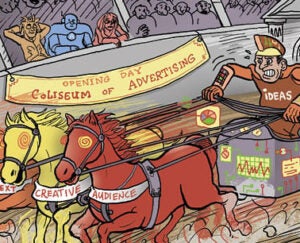
- Optimizing marketing to particular points in the journey to ensure a true fit between audience, medium and message with absolute relevance
A word of caution here. Let’s assume many brands generate some initial success given pent-up demand from previous months. Seeking to keep that train rolling will surely spur some marketers to use incentives to further drive revenue. But use of incentives comes with a cost beyond the dollar value offered: little long-term contribution to volume or margin and potential decay to brand health.
The past has shown us that how brands behave in tough times foreshadows their future far beyond past obstacles. It will require great discipline to balance acceptable near-term sales, driven by highly-selected audiences, while beginning to seed long-term brand consideration and opinion among broader prospects.
Incentives have their place to generate some short-term business, but let’s be judicious in their use. Reducing the cost of selling – a goal we should all share – allows brands to reinvest funds not spent in marketing back into their business (to R&D, for example), making for formidable businesses and brands in the long term.
Follow RPA (@RPA_advertising) and AdExchanger (@adexchanger) on Twitter.