 Last week, media communications agency Starcom USA announced that former Hill-Holliday executive Phil Geyskens has been hired as EVP/analytics & development director. He will join Starcom’s Managing Board and report to CEO Lisa Donohue.
According to the press release, Geyskens’ new role is “to find and tell data stories, which includes inventing new interfaces, visualizations, methods and applications to learn and act quickly to drive client marketing success.”
AdExchanger spoke to Geyskens about industry trends and the data challenge ahead for agencies, in particular.
AdExchanger: Do you see a service layer that the agency can provide given recent acquistions by Salesforce and Oracle and the emerging importance of Social CRM?
PHIL GEYSKENS: As always, [the agency] will find a way to provide a compelling service layer to clients. Ultimately, Oracle and Salesforce are software providers, and their service components are much closer to the technology than they are to the business.
So as an agency, by being close to the brand and the business success of our clients, we have an opportunity to make the link between the platforms on the one hand, and the clients on the other. At Starcom, there’s definitely going to be multiple agencies that are going to jump in that fray, there’s no question about it.
What do you think the key initiatives are from an analytics perspective for agencies?
Well, this is a continuously changing world where data becomes readily available, and where interaction happens more and more visibly. We’ve all been hoping for addressable TV for a long time –and, it will be coming at some point.
Similar to any vendor, agencies need to be able to collect that information, store it, and mine it for insights and understanding that can help drive a client’s business. So, that’s the basis.
As a result the agency is starting to move a bit into the technology space. For example, our structure here at Starcom reflects that. We have some very smart people who are coming from the development side and help us build tools and products that will ultimately drive clients’ business down the line.
We’ve already morphed into that hybrid between… a traditional analytics group, with what I would say is, a very strong technology arm.

What are the expectations around your role and its success metrics?
[Starcom CEO] Lisa Donohue and I have had long conversations about it, and continuity and evolution is where my role resides – meaning, under Lisa’s leadership my predecessor John Lowell started a strong move into technology, product development, and analytics combined. My job is to continue building on that and expanding the footprint. Success will be measured as we start developing more and more products that align and help us understand how we are impacting the human experience, and how we do that for our brands and, ultimately, how that drives business.
There’s a lot of prototype work that was done. At this point in time, the request is to make it into a nice package so that we can install it as a solution for our clients and growth their businesses.
Another mandate or measure of success is to build out and have analytics be a part of every client conversation. And then thirdly, we need to make sure we have the headcount here. We have 25 remarkable people on this team, who are delighted to continue working with this company, Lisa and myself. That’s the third leg of the stool that I am going to be evaluated on.
Finally, what key trend out there have you got your eye on in particular?
Single source data. In other words, we think that we have a lot of data now, but imagine how much more data is going to become available when we’re adding TVs to this mix, and some other offline expose to this mix as well.
A lot of marketers still spend 95 percent of their media in TV. We see that in the up fronts again. It is a medium that drives consideration and is still the highest reach and the highest impact in terms of brand recognition and brand play.
It plays an important role in business success of our clients as well. We can’t wait until the whole thing become one, and part of the same data set. That is an evolution that I’m looking at and hoping for, and, unfortunately, it has been promised multiple times and has not realized. So that’s one.
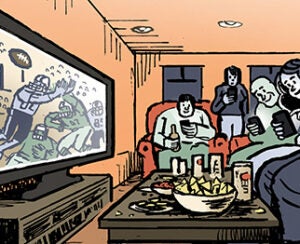
The second evolution, of course, is the whole concept about dual screen and social TV.
While we’re waiting for this advent of single source data for all marketing that we do and all experiences that we build, the dual screen component will be a fascinating opportunity for us to become smarter about how people consume parts of the media. It introduces us into the online stream in an indirect way. But it’s still better than what we had before in terms of correlation measurements.
Also – mobile, lots of opportunity, lots of things happening there with phones and what the tablet space is doing. That is a huge opportunity, and for many, still a question mark around data sources and data availability. So we’re working very hard on bringing that into the fold as well, and making sure it all becomes considered and analyzed.
By John Ebbert