
 You’ve got to hand it to Razorfish for even having a media practice.
Considering the clout of corporate siblings like Starcom Mediavest Group (SMG) and the growing power of media agencies in general, it would not be surprising to learn that – four years after its acquisition by Publicis Groupe — the digital agency’s media clients had been siphoned off by rivals as Razorfish circled the wagons around “experience design.”
But that’s not what happened. Today Razorfish handles media budgets of $450 million annually, and employs a media team of 300 – out of a total global staff of 3,000. Media revenues are 20% of its business and media clients include HSN, Citi, Starwood and Best Buy.
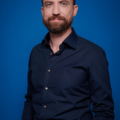
“Media is extremely important to us as a full-service agency,” said Shannon Denton, a longtime Razorfish executive who was promoted to CEO for North America in July after overseeing the agency’s Midwest business. “We see an opportunity for disruption with programmatic buying, to think about a new type of media model and how we can go to market differently.”
Denton was elevated at the same time another agency veteran, Eastern region President Pete Stein, became global CEO. Their appointments came after the exit of global CEO Bob Lord, who was followed out the door by global Chief Media Officer Jeff Lanctot and Chairman Clark Kokich. The departures led some, including me, to speculate on the negative implications for the agency in the all-important war for talent.

Turns out, Razorfish has a deep bench.
Denton declined to elaborate on the agency’s specific plans for its media practice, citing ongoing planning, but he hinted Razorfish sees opportunity in lightweight, platform-driven trading.
That sounds like “automation” calling. Which begs the question: How will Razorfish’s evolving media practice work together (or compete) with Publicis’ official trading desk, VivaKi Audience On Demand (AOD)? Will AOD “embed” with Razorfish media teams, or will Razorfish’s media arm function as a “conflict trading desk?” There’s some irony here, since Razorfish pioneered what was arguably the world’s first trading desk, ATOM Systems, in 2009 only to have that unit be absorbed by Vivaki AOD.
There are also the media agencies to consider. Razorfish’s alliance with Publicis media behemoth SMG — until recently formalized through the Vivaki umbrella — should in theory have helped it pick up business, but collaboration has proved elusive, some sources say. A lack of incentives at Publicis have often forced the leaders of its agencies – folks like SMG’s Laura Desmond and Razorfish’s Bob Lord — to compete rather than work together. Trading offline inventory, once a dream at Razorfish, has remained just that.
(Denton disputes that version of events, saying Razorfish works closely with SMG on three or four accounts, and is part of a consortium of Publicis agencies that collaborate on Disney.)
Additional uncertainty lurks in the looming merger of Publicis and Omnicom Group, which will create a new $35 billion conglomerate with at least five global media agencies and two programmatic trading desks. Razorfish will likely wait to show its hand with regard to changes in its media business until integration planning is complete and the dust settles around that deal – expected to close in late Q1.
Whatever happens with the POG merger, Razorfish intends to grow through integrated services. Media will work in tandem with other practices such as experience design, brand marketing and commerce.
In its brand marketing practice, Razorfish ascribes to an approach Denton calls “brand as a service.”
“The death of TV in building brands is certainly exaggerated,” Denton said. At the same time, “How do you come up with a utility or value-added experience that complements the big TV spot or the big idea?” The extent to which “brand as a service” can play nice with paid media remains to be seen. Razorfish maintains that it can.
Any discussion of Razorfish in the “platform age” must touch on its close partnership with Adobe. Alongside SapientNitro, Razorfish is one of Adobe’s two key agency partners that have standardized on the Marketing Cloud. Under the relationship, Razorfish is empowered to serve (one is tempted to use the word “service”) enterprise clients using Adobe software (analytics, ad buying, optimization, email marketing, etc). Adobe envisions a stack that clients will leverage holistically to support all consumer touch points, but most clients are using it today on an ad hoc basis.
Adobe is more advanced than many of its SaaS rivals (Oracle, IBM, Salesforce) in executing a vision of the marketing stack that is inclusive of both the data management platform and the CRM database, Denton argues. Paid media is obviously crucial to this vision, but it’s the hardest part to get right.
“Media is the holy grail to them, because of the massive amount of spend still in paid media,” he said. “Figuring out how they can get a share of that, and get out of slogging software sales to IT organizations, is completely their strategy. They’ve got a lot of money to throw at it. Like always, there will be independents – the best-of-breed solutions – but it’ll be heavy competition from the big guys on the integrated marketing stack.”
Down the road, Denton expects the “services layer” to be even more closely aligned with marketing software platforms. “I think the big tech companies will look to build joint ventures with services companies,” Denton said.
Razorfish, through its media practice, wants to lay the groundwork for that day.







