In-housing programmatic has gone from a nascent trend to the norm as brands seek more control over their first-party data.
Sixty-nine percent of brands have either partially or completely moved programmatic buying of display, video and/or CTV in house, according to a 2020 survey conducted by the IAB and Accenture Interactive across the US, European and Latin American markets.
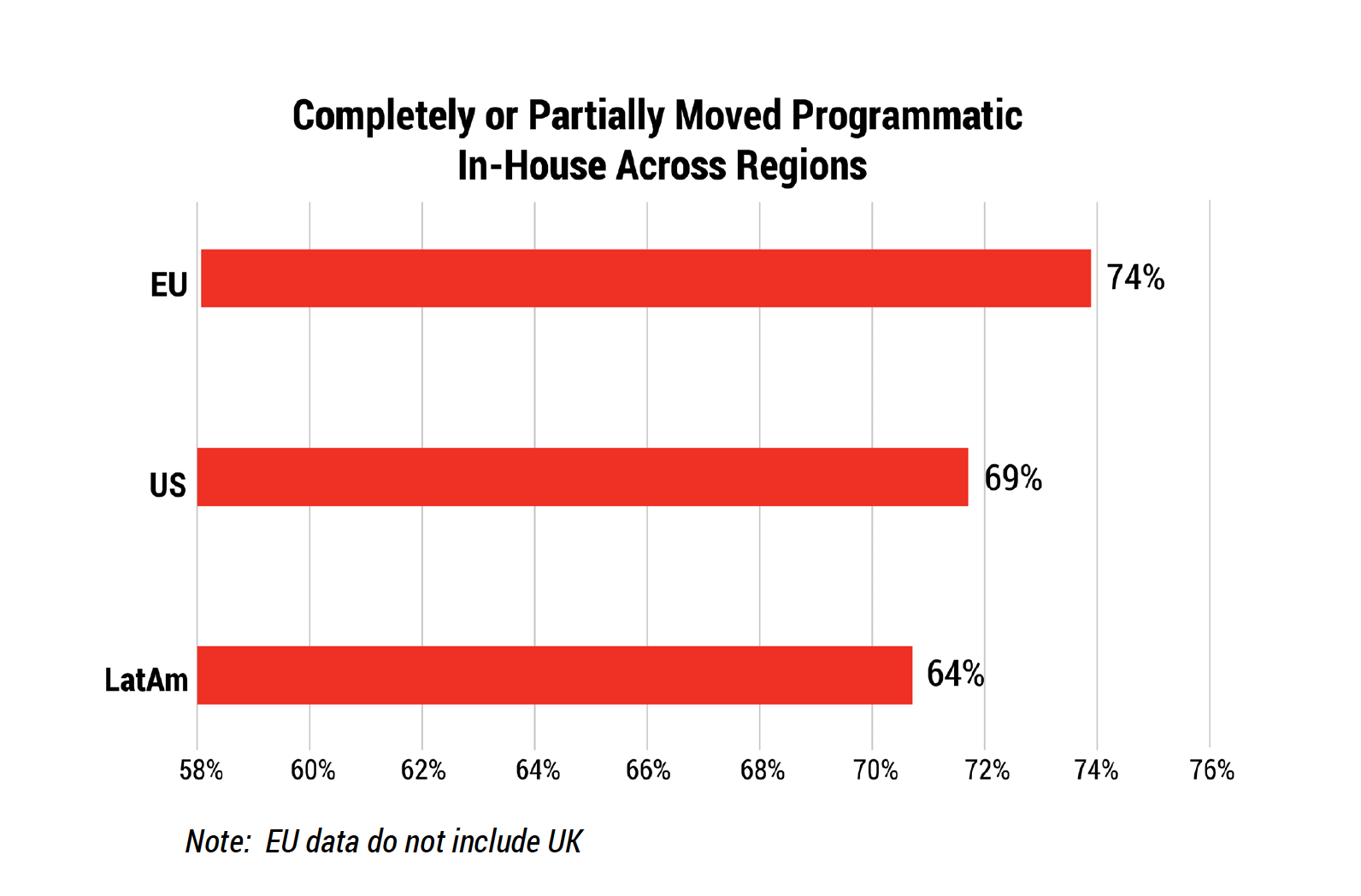
Brands were most inclined to in-house programmatic in Europe, with 74% of brands saying they had moved programmatic in house, compared to 69% of US brands and 64% of brands in Latin America.
“The European market had GDPR first, and they had to get their pipes in order,” said Orchid Richardson, head of the IAB Programmatic and Data Center. “They were more focused on getting good first-party data.”
Increasing data privacy regulations and the impending demise of cookies are accelerating brands’ efforts to move programmatic in house.
A CPG with multiple brands that owns its own ad tech contracts and uses a single platform can understand how a single user consumes different brands, noted Scott Tieman, Accenture global head of programmatic services.

“We think it’s critical [for brands] to own their first-party data, and in order to do that they need to own their own ad tech contracts,” he said. “That’s how they get insight into their customers and connect it to a data strategy across their organization.”
In the United States, data management and data ownership ranked as a leading reason to bring programmatic in house, with 36% of brands citing that as an objective for programmatic in-housing.
But the top two reasons for bringing programmatic in house globally were more about making marketing better and cheaper: increasing campaign effectiveness (42%) and cost efficiency (41%).
Bringing programmatic in house also isn’t an all-or-nothing proposition, with most brands falling on a spectrum of maturity in terms of how much marketing they do themselves.
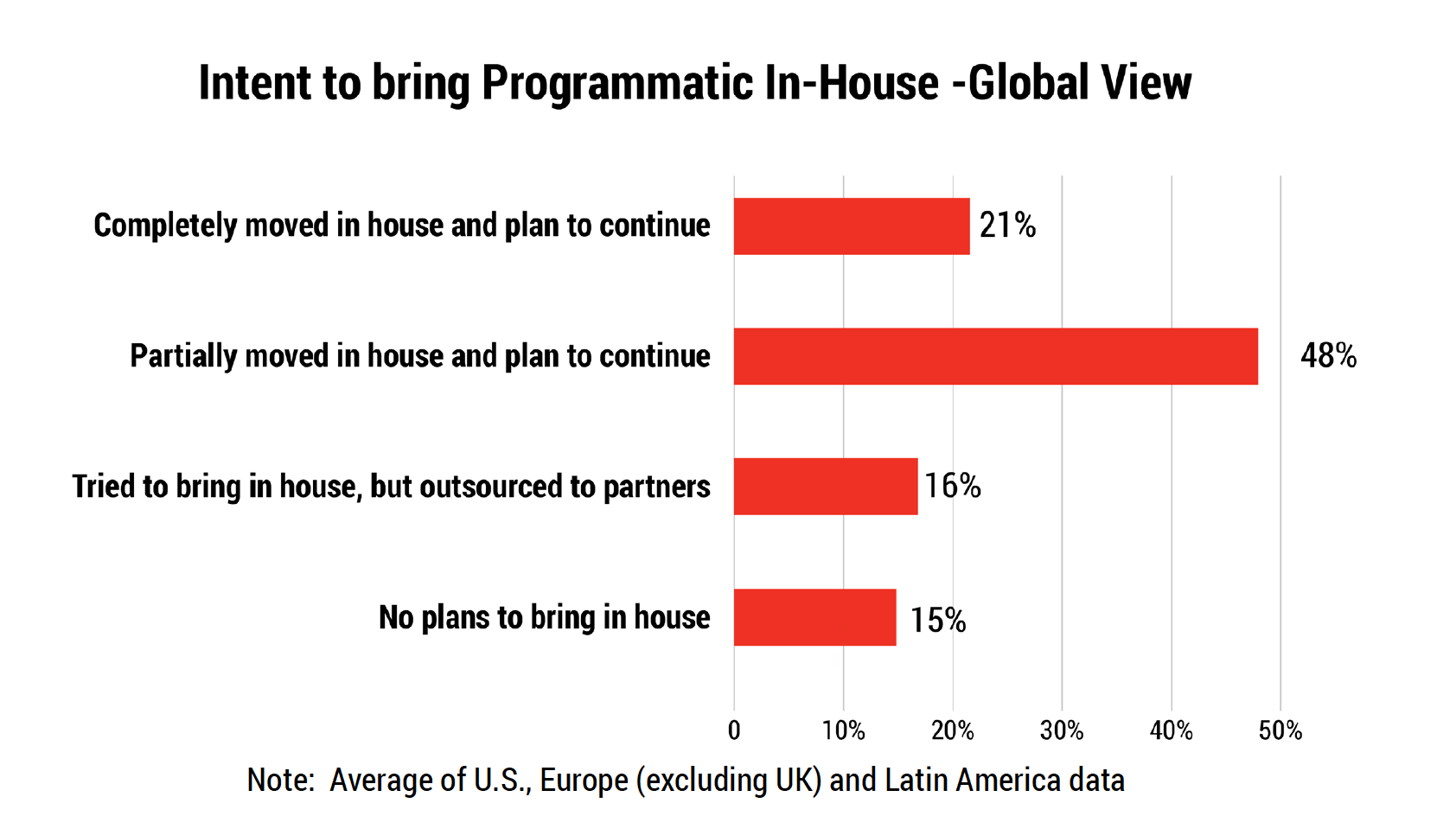 Twenty-one percent of brands said they brought programmatic completely in house. Another 48% have partially brought programmatic in house with plans to continue. Sixteen percent tried to bring it in house before outsourcing to partners instead. The smallest group, 15%, had no plans to bring programmatic in house.
“It’s a long-term journey,” Tieman said, noting that it often takes 18 months or more. Brands must develop a business case for in-housing that supports investments in ad tech and talent. They also often evaluate platforms and consolidate who they work with as part of the process – another time-consuming effort.
The dual effects of the pandemic – which accelerated brands’ move to digital – and the coming demise of cookies should push more brands to in-house programmatic, both Tieman and Richardson predicted.
“The reason you bring programmatic in house is because it makes you nimble,” she said.