Here’s today’s AdExchanger.com news round-up… Want it by email? Sign-up here.
 Google Display Starting To Pump
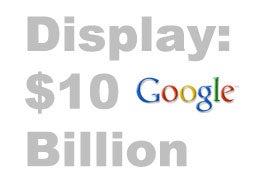
In a BusinessWeek article by Douglas Macmillan, Doug Anmuth of Barclay’s Capital tells BW, “Display ads are likely to contribute a little more than $1 billion, or about 4% of Google’s (GOOG) total sales this year—an increase of as much 40% over last year.” Blimey! Now analysts are starting to wonder when Google will hit $10 Billion in display. Read about the numbers.
Mobclix Enabling Geo And Brands
With Apple mandating that iPhone app developers remove the ability to use the phone’s location-based services, Mobclix is now offering another way in. By using Nielsen PRIZM and ConneXions on the Mobclix ad exchange, marketers can now target audience right to the zip code level and sync with their online (PC browser-based) audience targeting according to the company. Read the release. In that Nielsen PRIZM helps brand marketers target offline, too, (see discussion on Datalogix deal with Nielsen in November), the case for enabling digital buying for brand marketers accustomed to traditional channels could be made, too (iPhone).
iPhone LBS Edict Not So Bad
Greg Yardley suggests on his blog that all the hub-bub around Apple shutting down the use of the iPhone’s location-based services is much-ado about nothing as he writes, “No user should be asked to share their location without any visible benefit to them in the app – it wastes the user’s time and it gets the tinfoil hat crowd wondering what exactly sharing that location was for.” Read about the tinfoil and more here.
Brightcove, EyeWonder Jump In-Stream
Eyewonder announced that it has partnered with Brightcove to provide in-stream advertising solutions. What does this mean? Specifically, EyeWonder said in a release, “By incorporating the IAB VAST-compliant, open-source UIF into the Brightcove platform, organizations will be able to serve any EyeWonder in-stream video ads, including fully interactive linear and non-linear formats.” More standardization, improved scale for in-stream video ads is the goal here. Read the release (PDF).

Commoditization of Content
David Carr of The New York Times examines the Demand Media content machine model. Carr observes, “In those five days it took me to write this column, the company published 20,000 new articles or videos about losing weight, learning new tricks on a skateboard or tips for job hunting.” Read more.
It’s Outcomes Not Scarcity
Jeff Jarvis opines that scarcity is an anachronistic feature of a media owner’s selling strategy. Jarvis writes, “If you are selling a scarcity – an inventory – of any nonphysical goods today, stop, turn around, and start selling value – outcomes – instead. Or you’re screwed.” A lot more here.
Change Is Hard
On his blog, VivaKi’s Rishad Tobaccowala notes the difficulty of change, but adds that doesn’t mean one should go off in extreme directions to accomplish change. He writes, “Whenever people take extreme views and go off in extreme directions it makes me wonder whether they have done their homework and why all the drama?” Read about what is needed.
Schooling On eCPA
On ClickZ, WebVantage.net’s Hollis Thomases takes readers through the basics on how to calculate eCPA. A great overview for those who have yet to dabble (or are just ramping) in the ways of online performance marketing. Read it.
More Display Resurgence
Peter Kirwan of the UK’s PressGazette writes a link-laced piece entitled, “Online ad recovery will make life tricky for paid content publishers.” Kirwan isn’t so sure the paywall is the answer for publishers and notes that display advertising may be experiencing a resurgence, “There’s even a suggestion that real-time bidding for inventory on ad exchanges forces up the price of impressions.” Read more.
Another Mobile Ad Network
Yet another publisher has launched an ad network as Zinio tries to figure out (i.e. monetize) its iPhone app publishing strategy. Lucia Moses of Mediaweek notes the low number of downloads the company has seen for its magazine apps – still, the company is selling plenty of subscriptions according to the Zinio CMO. Zinio hopes the ad network model will help boost the financial prospects of their mobile apps. Read more.
Agencies Will Thrive
Recent intra-office chatter has spawned a blog post by kbs+p/The Media Kitchen’s Chief Digital Media Officer, Darren Herman, who says that “Marketers and their agencies are getting more involved in technologies both at an infrastructure and placement level.” As a result, years from now, Herman believes that even though “(tech) may not all be built internally, the marketers/agencies will have a seat at the table.” Read it.
More EU Data Talk
A special commission in the EU is set to discuss Europe’s regultations for the management and consumer privacy as the “Article 29 Data Protection Working Party” (nice name!) is set to convene on February 15 and 16 in Brussels, Belgium. Among it’s tasks (PDF here), the commission makes recommendations “on matters relating to the protection of persons with regard to the processing of personal data and privacy in the European Community.” The agenda for the meeting next week (PDF here) includes “Interpretation of Key Provisions : Data Controller/Data Processor” – explanation for these terms here. And, don’t forget your scorecard. (source: JulesPolonetsky)
Google Going DOOH
Google has extended its cross-platform, audience-buying tentacles just a little bit further with the announcement yesterday of an investment in China’s Bus-Online – “China’s largest in-bus digital media and advertising company” according to Reuters. Google will be a part of an investing consortium led by Disney, that is rumored to give stakeholders a 30-40% position in the digital-out-of-home company. Read more.
The RTB Gospel
Dapper’s head marketer Paul Knegten takes a bow on MediaPost and preaches the gospel about real-time bidding. Knegten writes, “I’m here to tell you that this buzzword’s the real deal, folks. And for travel industry advertisers, “real-time bidding” (RTB) presents the biggest potential to boost advertising efficiency since Google AdWords came along.” Get your real-time baptism here.