

 LinkedIn is going all-in on automation – promising to activate all display ads programmatically starting in 2017. In the meantime, it is expanding the number of native ad units that are available in a self-serve capacity.
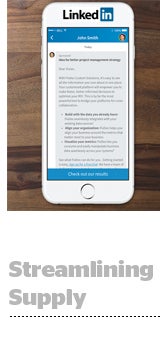
While advertisers could previously buy Sponsored Updates and text ads via LinkedIn’s self-serve campaign manager, they now can buy Sponsored InMail units in the same way.
Sponsored InMail used to only be available directly through field reps on an I/O basis. But LinkedIn decided it needed to be more flexible, said Irina Skripnik, senior product marketing manager for LinkedIn.
Some LinkedIn advertisers want full service, others want self-serve.
“Certain customers wanted to log in, set up their own bids and manage their own targeting,” Skripnik said, adding that self-serve also lets smaller businesses or nonprofits with lower budget thresholds access its native ad units.
LinkedIn’s sponsored content drove about 66%, or $115 million, of LinkedIn’s Q3 marketing solutions revenue.
The company sees the best performance and growth opportunity from native and mobile ads, said Russ Glass, VP of products for LinkedIn Marketing Solutions.

LinkedIn, however, is careful about how far it goes even with native.
It frequency caps InMail units, so members see no more than one every 60 days. Users can also opt out and LinkedIn’s “review queue” team monitors InMail content for quality control, Skripnik said.
And, to be clear, Sponsored InMails are only served in LinkedIn’s messaging environment, not a user’s personal or business email.
Despite its emphasis on native and mobile ad formats, advertisers still want banner display, which is why LinkedIn struck an earlier deal with AppNexus in September to shore up more supply via open and private auctions.
LinkedIn aims to activate all display ads programmatically beginning in 2017, Glass noted, following its first real push to build out a programmatic offering this year.









