
Here’s today’s AdExchanger.com news round-up… Want it by email? Sign up here.
Marvelous Marketing
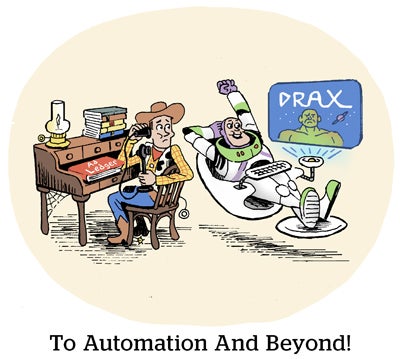
Disney and Target are a bellwether case study for how deeply interwoven major enterprise marketing partnerships can be nowadays.
In 2019, Target and Disney announced an advertising attribution product based on the Google Cloud Platform to attribute retail sales to TV ads. It was essentially a way for Disney and Target to understand how effective their co-marketing efforts were at selling Disney items in stores, and vice versa in promoting film releases.
Apparently, it worked pretty well. At least, the companies have gone well beyond doubling down on the approach.
This weekend, for instance, before the release of the newest sequel in Disney’s “Black Panther” series, Disney and Target will unveil a co-produced commercial featuring a star from the movie as a Target sales associate helping young girls with science-related projects. (The spot also heavily features LEGO products, another brand with lots of exclusive merch and huge co-marketing deals with both Target and Disney’s Marvel Universe.)
In August, in an episode of the Disney+ Marvel show “She-Hulk,” it was revealed that Wong, a prominent character who appears throughout the Marvel Cinematic Universe, was a former Target sales associate. (As far as we know, Benedict Wong, the actor who plays Wong, never worked at Target in real life.)

Put It In The Cart
Kroger and Albertsons are considering a merger that would create a new behemoth American grocer, Bloomberg reports.
The combined company would be the second-largest grocery chain, with 16.6% of the US market. Kroger is already the number two grocer with 9.9%, but Walmart has 20.9%.
Although Krogerbertsons would still be smaller than Walmart, a vertical merger like this faces tough antitrust odds. The DOJ has strong precedent to block the deal.
Vertical deals remove a competitor from a specific market, which is a big-time no-no, whereas buying your way into a market is allowed. (Thus Amazon can add Whole Foods to its cart, but two brick-and-mortar grocers can’t easily merge.)
The deal would be a leg up for both companies in terms of retail media and technology. Two top priorities for non-Walmart grocery ad platforms (as in Kroger, Albertsons, Target Roundel, Costco, Publix, Wegmans and Ahold Delhaize, which owns Stop & Shop) is to scale up their data and their retail footprint, since each store is a conversion hub for online grocery ads.
A Kroger/Albertsons deal would bring together the godmothers of retail media, so to speak: Kroger’s Cara Pratt and Kristi Argyilan from Albertsons.
The Power Of Polarization
In the US, politics and polarization go hand in hand.
Political tribalism extends to what TV shows you watch, what sports you follow and where you buy your groceries.
With direct political targeting based on race and party affiliation banned by Meta, campaigns are leaning into cultural signifiers to find potential voters and supporters.
Axios examined more than 93,000 Facebook and Instagram ad targeting inputs to see how 25 campaigns from both sides of the aisle target messages based on consumer habits and media.
For example, Democratic campaigns were likely to actively filter out fans of Joe Rogan, NASCAR, Ted Nugent and “Duck Dynasty.” (Why target an ad to someone who isn’t going to back you anyway?) Instead, they’re reaching fans of NPR, soccer, Lululemon, Blue Apron and Spanish-language media.
Republican campaigns, meanwhile, filter out people who shop at Whole Foods or Trader Joe’s, and proactively target Chick-fil-A, Cracker Barrel, Cabela’s and Bass Pro Shops customers.
But while this degree of granular targeting helps campaigns avoid wasteful ad buys, it may also contribute to the echo chamber effect that drives political polarization.
But Wait, There’s More!
Sounds Profitable: Does podcasting have an ad frequency problem? [blog]
The IAPP publishes its annual Privacy Tech Vendor report. [release]
Roku takes the fight to Amazon with new smart home devices, including lights, doorbells, plugs and cameras. [release]
Kyra, a video content studio for social creators, raises $15 million. [The Information]
Adam Singer: Respect your users. Treat them as self-aware, intelligent humans capable of critical thinking. [blog]
Google replaces its Webmaster Guidelines with Google Search Essentials. [Search Engine Land]
You’re Hired!
Former Gannett CRO Kevin Gentzel is Newsweek’s new global chief commercial and growth officer. [release]
Criteo expands its Americas client solutions leadership team, with Katie Kulik as executive managing director of the group and Courtney Cochrane as managing director of enterprise. [release]







