Simon Property Group, the largest shopping mall operator in the world, is taking its biggest step yet into the world of data-driven advertising. On Thursday, the company launched Simon Media Network, its version of a retail media network.
Simon isn’t a total newcomer to advertising, said CRO Jared Blechman, who joined the company this year after a long stint in biz dev leadership at the NBA. In recent years the company has built a network of thousands of digital screens that carry ads in its properties and has other branded experiential campaigns it does with retailers and marketers.
A priority for Simon has been to “identify new growth opportunities outside of its core leasing business,” Blechman told AdExchanger. “So that evolution has been ongoing.”
What’s new today is that Simon is creating a programmatic vehicle for advertisers to use its data for targeting and measurement in campaigns across the web.
Customers can use a managed service, Blechman said, but there’s also self-service capabilities for advertisers or agencies that want to use their existing DSP/SSP stack.
“One of the important principles with developing this,” he said, “[is that] we wanted to be very flexible and meet the advertiser where they are.”

Those advertisers include stores and products carried in malls, as well as non-endemic companies in travel, food and finance that might want to target different audience segments.
The first important question for any retailer or first-party data owner that launches an RMN: Will it withhold identity and targeting data within a more walled garden-esque setup (à la Walmart Connect’s setup atop The Trade Desk’s pipes)? Or will it allow advertisers the visibility to track and compare those audiences within their normal third-party programmatic supply chain?
However, unlike retailers, including many within any given Simon mall that possess their own purchase data, Simon doesn’t really do much in terms of direct customer transactions. So where does it get its RMN data?
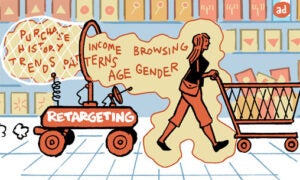
The data is derived from a combination of its own loyalty program (Simon+, obviously), opted-in location tracking (like if you’ve signed on to the Wi-Fi) and purchase data licensed from third parties, Blechman said.
Part of the pitch for Simon Media Network is also about its broad view of consumers. People are at the mall to shop, but also to eat or perhaps to see a movie or some other entertainment.
“It’s much broader than the audiences of traditional retail media networks,” Blechman said.
Just like the traditional value proposition of mall shopping, he said, Simon Media Network derives value from being “that real-world platform for brands and retailers to engage” shoppers who otherwise are impossibly fragmented.
For now, though, meet SMN, and marketers can add one more RMN to the pile.