 “Data-Driven Thinking” is a column written by members of the media community and containing fresh ideas on the digital revolution in media.
Today’s column is written by Mark Hughes, CEO of C3 Metrics.
Economic changes usually begin with whispers. You meet a client for coffee, and he tells you Q2 doesn’t look so good. Or you go to an industry event and there’s a certain confidence in the way people talk, and plan. I’m hearing whispers about a complete change in the economics of digital advertising right now. They’re about viewable impressions, and those whispers are about to elevate the volume by decibels.
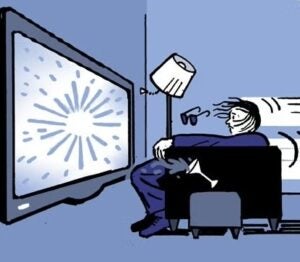
The controversy swirling around viewable impressions will change everything we know about the way advertising is measured and priced. Everything. This will be OK in the long run. For the short-term, the definition of viewable impressions, and the unwillingness of advertisers to pay for ads not viewed, is a game-changer of the highest magnitude.
A little background first. The data found in my company’s most recent report indicates that click-through rates on banner ads may be 179% higher than reported for marketers who are not taking viewable impression data into account. The report found that 68% of all display ads served are never ultimately seen by consumers according to the current IAB viewable impression standard. Of the ads that are not seen, 12% never fully load.

Now, one of the whispers is that the definition of a viewable impression will change – it’s true, and it’s coming soon. The IAB, ANA, and 4A’s will redefine a display impression to be a display ad that fully loads in the consumer’s browser, and comes in view of the consumer’s screen for at least one second. This new industry standard will change the definition from a simple, outdated server request, which misses if the ad even loads let alone is seen. This will ultimately bring more ad dollars into the digital channel. It will change the way those ads are measured.
For the advertising ecosystem to thrive and grow, advertisers need to get value, and publishers, networks, and DSPs need to get value, too. But when such an imbalance exists (a case when technology moved faster than measurement)–the ad ecosystem gets clogged. Right now, it’s clogged.
Whispers. When talking privately to publishers, I hear whispers of the pendulum swinging too far, and fear of economic impact (revenue drop). Advertisers will want new pricing models based on research around viewable impressions.
The vision I foresee has no fear at all. After all is said and done, the Keynesian dynamic of supply and demand is the great equalizer. Going forward, four things will happen:
1. CPMs for non-viewable impressions will drop to zero. This essentially follows the same idea that if a TV ad never aired, the advertiser doesn’t pay. It will immediately improve ROI for advertisers by approximately 68%.
2. CPMs will rise for viewable impressions by at least 68%. Likely a bit more, since there’s obviously transmission costs for ads not viewable but served. With the offset, no revenue will be lost by publishers.
3. iframe delivery of ads will dissipate and eliminate fraud possibility with nested iframes and iframes in general.
4. After advertisers only pay for viewable impressions, effectiveness of display will increase even more than the percentage of ads previously unviewable. For when DSPs and RTB algorithms optimize with viewable ads versus view-through cookies, which ignore the most important four letter word (view)…the ecosystem produces more ROI. And ad dollars producing more ROI, beget larger budgets.
The whispers as I said, will become audible, and by the time conference season rolls around in the fall, it will be a roar. These are the four cornerstones of viewable impressions. No need to whisper about them. Let’s get the whispers into the conversation and fix this issue.
Follow C3 Metrics (@C3metrics) and AdExchanger.com (@adexchanger) on Twitter.