 Brand Networks, a social marketing firm focused on large retail clients, has acquired rival Optimal Inc. for $35 million. The deal brings together two early movers in Facebook’s Preferred Marketing Developer (PMD) program, each adept in its own way at seizing the social opportunity.
In Brand Networks’ case, the strategy has been to focus on big retailers and their national and regional marketing needs within Facebook. Its profile within the PMD ecosystem resembles that of Adobe, the other company of size certified in all four badges.
Optimal, meanwhile, has emphasized the data-driven (automated) aspect of Facebook’s ad offerings, aggressively leveraging both Facebook Exchange and the Custom Audiences database-matching program. It has also added cross-platform in the past year – winning access to Twitter’s Ad API and LinkedIn’s Sponsored Updates partner program.
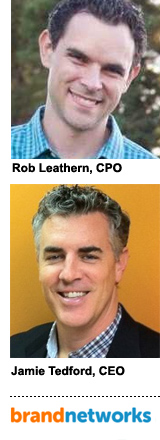
Led by CEO Rob Leathern, Optimal has raised $5.1 million from a group of early investors that includes Right Media’s Mike Walrath. He’ll be chief product officer at Brand Networks.
Brand Networks recently raised $68 million, but it’s not clear how much of that money was used for the Optimal transaction, since the companies did not disclose terms (all cash, cash-stock or all stock) beyond the total deal value.
Unlike many other social ad platforms, including Optimal, Brand Networks is not primarily pushing a SaaS business model. That’s because the brands it goes after often demand significant localization of their marketing efforts, requiring training and managed services at the branch level. This is where Optimal’s automated ad-buying chops could come in handy.

Both companies are profitable, something of a rarity with ad-tech mergers.
According to Brand Networks CEO Jamie Tedford, “performance marketing” has gained influence in marketing as individual media impressions are more easily linked to a store visit or other action. It’s about extending the measurement capabilities of ecommerce to all channels.
“The underlying common denominator of performance is measurement,” he said. “Up until now we’ve only had that ability for online specifically for click-to-purchase. But we’re starting to et to where we can measure performance in many ways, and drive-to-retail is one such way.”
“You’re pulling a larger percentage of marketing budget into what can be categorized as performance,” he added.”That’s particularly where we want to live.”
Meanwhile, he says the idea of “social” will fade into the scenery.
“We’re defining social as any online property where the idea is to connect, follow, friend, fan and thereby get information in any sort of news feed,” he said. “I don’t necessarily put us in the social camp because it’s so prolific at this point, and we get so much information not through a social network as a website but through my personal website, computer, connected device.”
The deal also offers some geographic synergies. Brand Networks is based in Boston, while Optimal is in San Francisco.