“The Sell-Sider” is a column written by the sell-side of the digital media community.
Michael Zimbalist is VP, Research & Development Operations for the New York Times Co. He also co-founded the Online Publishers Association (OPA) and serves as a member of its executive committee.
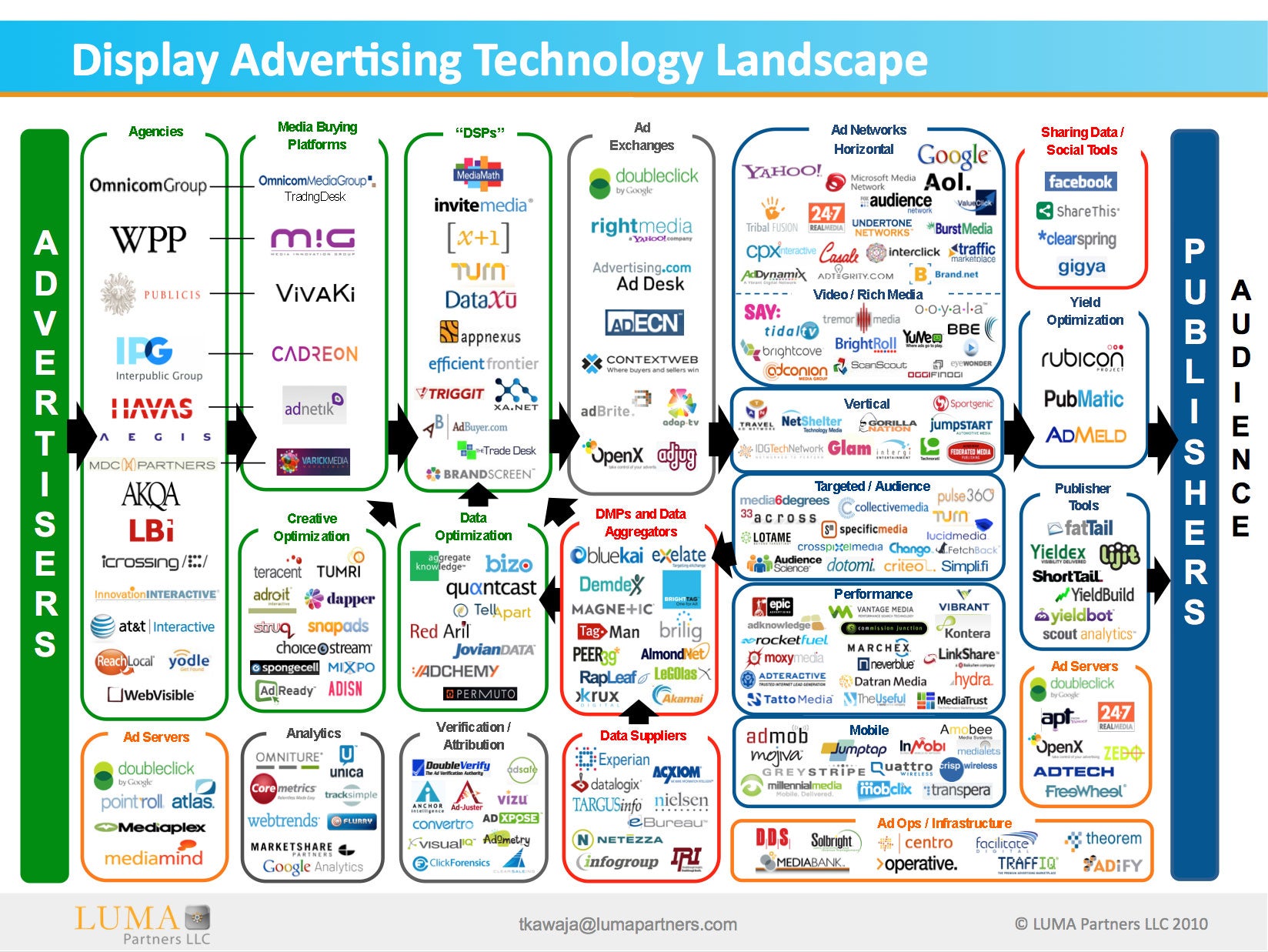
In the years since Terry Kawaja first published his famous chart illustrating the diversity of companies within the online display advertising ecosystem, I have witnessed literally dozens online publishers, large and small, come to grips with the way that data flows within this complex marketplace. The process that publishers go through closely resembles a modified version of the Five Stages of Grief that was first described by Elisabeth Kubler-Ross. It goes something like this:
Stage One: Denial
The publisher is alerted to the fact that (in all likelihood) a wide variety of different companies – so called “third parties” – are planting pixels or dropping cookies throughout the publisher’s website.
The publisher’s reaction is bewilderment, expressed as denial: “No way. Uh-uh. Not on my site. This can’t possibly be happening.”

Stage Two: Anger
But it is happening. And, by using any one of a number of tools such as Ghostery from Evidon or Data Sentry from krux digital, the publisher watches in disbelief as various cookies and pixels are activated upon their pages in real-time.
This disbelief quickly boils over into anger: “What?! Who are all these companies? They have no right to be on my site! I’m going to hunt them down, turn them off – and then some!”
Stage Three: Despair
With the help of Ad Ops, the publisher painstakingly begins to unmask the third parties. Some of them are indeed uninvited interlopers leeching audience data. But many turn out to be either vendors with whom the publisher has legitimate business deals (for things like analytics, syndicated content, or tools) or – worse yet – the publisher’s own advertisers.
This latter revelation leads to a sinking sense of despair: “You mean my advertisers know certain things about my audience that I’m not privy to? You mean they can apply their own targeting data without any help from me? No wonder I’m trading analog dollars for digital dimes. This is awful!”
Stage Four: Bargaining
Now the publisher is really, truly engaged. A plan starts to take shape. Loosely speaking, the plan has three parts: 1) Review and tighten up any agreements with legitimate service providers to make sure that information from the publisher’s site cannot be used for purposes other than provisioning the service in question; 2) Where data leakage to third parties can be contained – contain it, by doing things like minimizing reliance on ad networks; 3) Open a direct dialog with agencies and advertisers each of whom share the publisher’s desire not just for greater transparency but also for margin expansion which can, in theory, be achieved by removing some of the middlemen between buyer and seller.
We have now reached the bargaining stage: “Ok. If I can understand this, and change a little bit myself, I can make it work. I need some time and I need some tools. But if I persevere, there might even be some good that comes out of this.”
Stage Five: Acceptance
Now the publisher has finally come to terms with the technical architecture of marketplace in which we all operate. With knowledge and understanding has come some degree of power to control those elements of the digital advertising value chain that can be controlled. New strategies emerge, such as direct sales of non-guaranteed inventory, or audience extension programs, or the formation of private exchanges. These strategies all point to a significant change in the market from where things stood several years ago: The supply side has woken up!
When the publisher becomes more assertive by implementing a proactive data strategy, we have finally arrives at stage five, acceptance: “I’ve got things under control. I can deal with this. After all, it’s the way the Internet works. And it’s actually pretty cool.”
Follow zimbalist (@zimbalist), The New York Times (@nytimes) and AdExchanger.com (@adexchanger) on Twitter.