
 “the creative” is a column focused on the creative side of digital marketing.
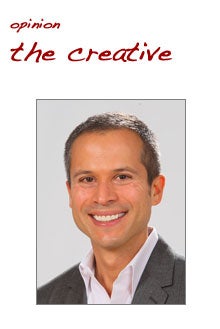
Today’s column is written by Barry Lowenthal, President of kirshenbaum bond senecal + partners‘ The Media Kitchen.
The original thesis presented to me by AdExchanger.com was that technological innovation is occurring on the media buying side but there is less innovation on the creative side. In fact, according to AdExchanger.com, there may be a rapidly widening gulf.
I’m not sure this thesis is entirely accurate.
Although my perspective is shaped by my own agency situation, and not based on an industry-wide survey or vantage point, I’ve noted that media buyers have actually grown closer to the creatives as innovative technologies help bring ideas to life.
The shift from buying media placements direct from sites to buying audiences and individual impressions in real-time on public and private inventory sources represents one of the most important media buying and targeting shifts the industry has seen in a long, long time. This shift has not only changed the way media folks think about media buying, it’s also forced the creative to think about segmentation, relevance, and messaging, which directly affects content creation.

A close association between creative and media allows ideas to be brought to life much easier than if media didn’t have strong creative agency ties. In fact, I’m not sure how innovative digital ideas are sold without easily being able to show how they would work with gorgeous mocked up assets.
One way for an agency to be successful is to insure there is no divide. The innovations in media buying, particularly around targeting, have created opportunities to improve relevance by bringing the message creators closer to the media buyers.
While there has certainly been a lot of innovation in the media buying side, mostly due to automating much of the bidding and targeting functions, there has been less automation on the creative side. And I’m not entirely sure the creative side can be entirely automated or even become as automated as the media side. There is the art side to our business, which still requires right brain thinking. Right brain thinking continues to be difficult to outsource or automate.
When talk about audience buying and the opportunity around bidding on individual impressions originally surfaced, it was quickly apparent that this dynamic would enable the delivery of individual messages based on various behaviors and actions. And while dynamic creative deployment can be useful, there still remains the need to create the basic images from a brand idea. It’s still too costly to send discrete and individual images to every single impression. I’m also not convinced that the micro-relevant message will markedly improve effectiveness.
But this opportunity has created a new way of thinking around creating relevance, which brings together media buyers, creatives, data analysts and traders together in a team. Such teams have never existed before. Most agencies just don’t have this collection of people so there will be a divide. But for those that do, instead of a divide, there is opportunity to drive even further collaboration and message/media relevance.
Follow Barry Lowenthal (@barryl530), The Media Kitchen (@theMediaKitchen) and AdExchanger.com (@adexchanger) on Twitter.









