This Election Season, Buyers Can Curate Deals Based On Voter Values
OpenX and Givsly’s new curation solution lets political campaigns reach voters based on data sourced from nonprofits, rather than traditional party affiliation.
Gamera, a media quality measurement startup for publishers, announced on Tuesday it raised $1.6 million to promote its service that combines data about a site’s ad experience with data about how its ads perform.
AudienceMix, a new curation startup, aims to make it more cost effective to mix and match different audience segments using only the data brands need to execute their campaigns.
Traffic-starved publishers are hopeful that their long-undervalued audience data will fuel advertising’s automated future – if only they can finally wrest control of the industry narrative away from ad tech middlemen.
The layoffs reflect a strategic decision on People Inc.’s part to free up money to invest in growth areas, according to CEO Neil Vogel’s memo to employees.
Through Index Exchange’s data vendor marketplace, curators gain access to third-party data sets without needing their own integrations.
GAM’s dinner with ad agencies sparked speculation that Google is preparing to spin off its bundled SSP and ad server as a remedy to its ad tech monopoly. But Google says it’s just part of the trend of SSPs going direct to buyers.
The SSP is betting on the DOJ’s antitrust remedies, plus closer relationships with agencies, DSPs and mid-sized advertisers, to help it eat some of Google’s lunch.
CleanTap, an ad tech startup launched by the founder of Method Media Intelligence, wants to separate the wheat from the chaff in CTV by serving as a curation layer between DSPs and SSPs.
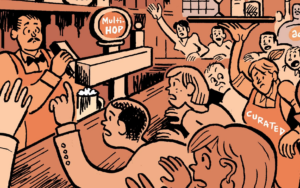
Enjoy this weekly comic from AdExchanger.com that highlights the digital advertising ecosystem …
The Trade Desk currently has no concrete plans to deprecate its legacy Solimar user interface in order to push adoption of its new UI, Kokai.
Hearst has seen improvements in addressability between 30% and 200% since introducing AURA, its AI-powered ad targeting solution, last year.
Classify is entering a crowded space of AI-powered contextual curation offerings. But the company is already teasing some high-profile integrations thanks to its network of well-connected advisors.
Magnite’s SpringServe deal illustrates why SSPs need a video ad server; Google grapples with AI search’s impact on publisher traffic; and Anthropic’s AI assistant is a law enforcement snitch.
Google’s DV360 adding attention as optimization signal could finally help wean buyers and platforms off bidding on ad inventory based on viewability.
Most sell-side curation deals appear in line with typical SSP take rates, according to Jounce Media. In fact, some of these fee structures resemble how publishers have long done business with supply-side partners.
The Brand Safety Institute is expanding its publisher transparency initiative to include new media quality assessments, including data compliance.
Programmatic bidding algorithms aren’t always aligned with campaign goals, so agencies are relying on AI tech to create algorithms tailored to their campaigns instead.
The process of setting up curated private marketplaces for bespoke audiences and vetting what inventory gets included can be incredibly time-consuming for agency teams.
Just because curated PMPs and direct-to-DSP deals are trendy doesn’t mean they should be the focus of every publisher’s tech stack.
The curation debate is missing a critical piece: standardized reporting. Without it, curation risks leaving publishers in the dark about its actual value.
For publishers, digital advertising is a lot like playing craps, says Aditude’s Justin Wohl. It’s all about tuning out the noise while placing safe bets that work for your monetization strategy.
Curation is amazing – for SSPs. The question publishers continually ask is, “Is curation good for us?” That’s the wrong question.
Criteo’s Brian Gleason shared how it is working with agencies to capitalize on curation and measurement opportunities in retail media and CTV.
The first half of this decade has left publishers reeling from a pandemic jab and an AI uppercut that rearranged our reality and knocked us to our knees. Here’s how pubs and their ad tech partners can punch back in the years ahead.
A new storyline is emerging around curation, one in which publishers feel they’ve lost out to middlemen on yet another opportunity to monetize their audiences.
2024’s most popular guest columns offer a snapshot of an industry in flux – and one that’s grown cynical due to repeated promises of unrealized change.
In response to shifting ad industry trends, A360 Media abandoned its made-for-advertising model four years ago and streamlined its site design to court programmatic demand.
A class-action lawsuit takes Office Depot to task for deceptive pricing and ads; YouTube is taking over TV, but brands may be missing out; and advertisers weigh in on which marketing trends are worth the hype.
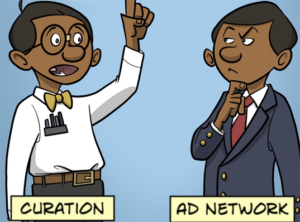
Two perspectives have emerged on curation: The value argument highlights refined audience targeting, while the ad network argument emphasizes enabling smaller players to compete with scaled giants.