Anyone watching ad-supported connected TV apps at this time of year is likely seeing lots of election ads. That’s because CTV has become a favored distribution channel for candidates to spend their ad dollars.
Local media, on the other hand, is contextually relevant but not as popular for election campaigns. The gerrymandering of districts often means that a region’s coverage or DMA doesn’t align with the congressional district a candidate is trying to reach. (Consider a New Hampshire candidate being tied to the expensive Boston market for local news.)
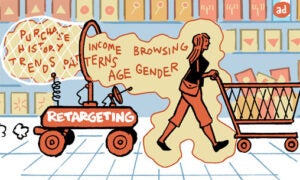
But whether connected TV is effective for politicians is an open question. When candidates blanket an area with CTV ads before they show up to canvass in person, for example, is that clever or creepy? Letting politicians do “clever” campaigning has backfired in the past, and Facebook/Meta is still digging out of that mess from previous election cycles.

No wonder TikTok, already under scrutiny for its foreign ownership, bans political advertising and is now blocking politicians from fundraising on its platform, too.
Then, speaking of Meta and messes, is Facebook the next AOL? Despite billions of users and a hard-to-beat ad engine, its growth has stalled. And the metaverse, its purported replacement, is still years away.
The head of our gaming beat, Associate Editor Anthony Vargas, unpacks the metaverse opportunity. For one, although people often conflate them, gaming and the metaverse are not the same thing, he notes.
Despite skepticism, metaverse technology will likely (eventually) become widely adopted, but the reality is that many technologies languish for years before finding a useful application. Just look at voice and how long it took for Alexa, Siri and Google Home to gain a foothold.
But Meta may not be the best – or at least not the most convincing – evangelist for the metaverse.
Consider CEO Mark Zuckerberg’s decidedly uncool avatar in Horizon Worlds, for which Facebook was widely mocked. Zuck’s bland look isn’t one that will inspire would-be followers – and it’s just this kind of misstep that adds fuel to the argument that Meta could be heading the way of the once-powerful AOL.