
“On TV And Video” is a column exploring opportunities and challenges in advanced TV and video.
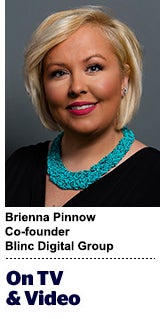
Today’s column is written by Brienna Pinnow, co-founder at Blinc Digital Group.
The concept of advertising’s walled gardens isn’t new. For at least 18 years, some in the media industry have used the term to label powerful companies with scalable media footprints and ownership of advertising’s most valuable commodity: consumer attention.
In 2000, some worried that AOL-Time Warner would become a walled garden, as The Wall Street Journal reported. Could it one day become so big that it could force its “customers to listen to only Time Warner music, watch only Time Warner movies, read only Time Warner news, and so on?”
This idea may give people a good chuckle now, but the current media landscape – even for advanced TV – isn’t all that much different. Big media players are changing the consumer experience, reaping the benefits of advertisers’ spend and dictating the rules as they go along.
Move over, Facebook and Google. Today’s new breed of walled gardens includes companies such as Roku, Hulu and even traditional TV programmers. As is common with walled gardens, they provide the allure of being an “easy button,” helping advertisers reach their most valuable audiences. And because they have the supply that advertisers demand, walled gardens also have the power to control the entire process – from what data can be used for targeting to what level of post-campaign insights they provide.

I’ve worked with several advertising agencies that are already feeling the “walled-garden effects” in the advanced TV world. Many companies slinging over-the-top and connected TV ad space are ironically unwilling to share detailed information about specific publisher inventory on which the ads may be running.
I understand media companies’ desire to control the message and the business need to optimize ad yield. But how can the industry embrace the current excitement and promise of people-based TV advertising while skipping past the part where progress stalls because we’re handcuffed by the walled gardens?
The answer is to democratize data with an open ecosystem approach. As Scott Howe, CEO of LiveRamp, recently stated so eloquently, “I wish the walled gardens would build a few more doors and windows.”
By taking a privacy-compliant approach to sharing audience data and campaign exposure details, media companies can further empower advertisers to use the platform or partner of their choice to manage the buying and measurement process.
Helping advertisers understand which content and inventory works best for certain audiences and campaigns just scratches the surface in terms of the possibilities. If advanced TV media companies enabled ad-log data to be connected securely to a common ID, advertisers could append third-party data to learn more about who is and isn’t responding, connect sales data to understand ROAS and even link it to exposure data from other channels for a true multitouch attribution solution.
If advanced TV companies are as confident in their media offerings as I believe they should be, then opening this “door” to more data should give advertisers a new window of opportunity – perhaps to invest even more in TV than they do today by giving it the credit it deserves.
Do you remember CompuServe? How about Prodigy? Those were the other two internet provider walled gardens called out in the 2000 WSJ article about AOL. Why aren’t those companies household names two decades later? Because they added another layer of bricks to their walled gardens while AOL took a different approach: “AOL’s application was imperfect, but it was better, more open and easier to use.”
History has shown that long-term, open ecosystems drive the most value for both buyers and sellers. And so long as advertisers use their purse strings to carry out this vision of a media world with fewer walled gardens, I see a real possibility for the advanced TV industry to architect the experiences being sought by both consumers and advertisers.
Follow AdExchanger (@adexchanger) on Twitter.











