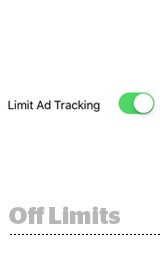
 Apple’s Limit Ad Tracking (LAT) feature is about to have a few more limits in iOS 10.
Although Apple has allowed users to opt out of seeing interest-based advertising since iOS 6, vendors and advertisers could still use device IDs for functions like frequency capping, attribution, debugging and fraud detection.
No longer.
In iOS 10, when a user opts out of ad tracking (a matter of going into their settings and the selecting “Privacy” followed by “Advertising”), Apple will send back a hashed identifier – essentially a string of zeros – rather than a unique advertising identifier, which prevents ad networks from targeting or tracking that user.
Vendors that used the IDFA for frequency capping, attribution, etc., will just have to find another way. It’s not a Chicken Little situation, but when Apple sneezes, everyone has to check if they’ve got a cold or not.
According to TUNE, the number of users with Limit Ad Tracking activated (it’s off by default) has been holding steady at just under 15% – people who actually took the time to dig around in their settings to ensure they’re not being tracked.
“The population most likely to turn LAT on is the same population that is least likely to engage with advertisements and is already excluded from targeted advertising based on Apple’s terms for IDFA,” said TUNE CEO Peter Hamilton.
Apple will announce the iOS 10 release date at its iPhone 7 launch event on Wednesday.
Hamilton, Kochava CEO Charles Manning and Apsalar CEO Michael Oiknine answer the question: How big of an impact will Apple’s Limit Ad Tracking changes in iOS 10 have on advertisers?

We had the same conversation with marketers on ad blocking. In fact, TUNE has seen almost no impact on marketers who are measuring the performance of their mobile ads due to the increased use of ad blockers. This is likely due to the fact that those using ad blockers are also unlikely to engage with ads before installing an ad blocker.

Marketers must work with the tools that the platforms provide, and the ability for consumers to limit ad tracking is actually what gives marketers any ability to track at all. Having one identifier that can be used across marketers has helped build the mobile app economy, and the ability for consumers to opt out is an important part of maintaining the use of IDFA.
By probabilistically matching to a cookie or device attributes, marketers can still determine with reasonable certainty which consumers went on to install their app or make a purchase without gaining access to a persistent identifier for that consumer. This respects the consumer’s wish to limit ad tracking.
The reality is that the change in iOS 10 with LAT will impact a number of vendors in the ecosystem. The people it will impact have not been following the rules of LAT and have been using identifiers despite the settings of LAT for a given device identifier. The trick for the ecosystem is to rely on attribution vendors that are able to both support requirements for LAT rules and provide attribution signals to the rest of the ecosystem.
Developers can continue to match installs to the vendors and campaigns that drove them.
If no advertising ID is available, a probabilistic technique called fingerprinting uses non-PII signals to connect installs to the marketing events and vendors that drove them, [which] enables marketing effectiveness measurement without the third-party user profiling that Do Not Track is intended to prevent.
A second method, IDFV-based tracking [identifier for vendor], is a persistent identifier for every app publisher across all of their apps. IDFVs enable us to link an install to marketing activity from that vendor. This method is commonly used in server-to-server-based attribution instances.
In my view, there’s a third-party versus first-party relationship distinction here. Limit Ad Tracking is about giving users notice and choice with regard to interest-based advertising and third-party data collection. Attribution is about crediting a marketing activity or vendor with a result based on first-party relationships between users and app publishers. You can do the second while scrupulously respecting the first. Both fingerprinting and IDFV-based tracking maintain that balance.