

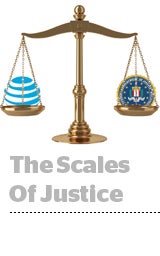
 AT&T CEO Randall Stephenson testified on Thursday in defense of the company’s $85 billion acquisition of Time Warner, which is being contested as an antitrust violation by the Justice Department.
Stephenson reiterated AT&T’s defense that without strong content to incorporate into its mobile, streaming and linear distribution, the telco is being left behind by online platforms like Google and Amazon.
“If you miss one technology cycle, it may not kill you, but it will make you sick for a very long time,” Stephenson said.
With improved data-driven targeting across AT&T’s TV and mobile networks, Stephenson said a stronger advertising business will allow AT&T to bring down the price of subscriptions, which is the potential consumer blowback the DOJ is targeting in this case.
Time Warner CEO Jeff Bewkes, who testified Wednesday, said online video players dealt his business a “double whammy” by pulling subscribers out of TV bundles and ad dollars into digital.
Stephenson, during his testimony, said the DOJ’s argument that AT&T would leverage Time Warner content by restricting it from competitors doesn’t make sense, since Time Warner’s value is tied to its wide distribution.

However, Cornell Law School professor and antitrust expert George Hay said the DOJ has a sound theoretical case against AT&T.
“The weakness is in the magnitude of those effects,” Hay said, since even a small drop-off in the government’s forecasts for consumer damages would upset its case.
For instance, DOJ expert witness Carl Shapiro, a professor at UC Berkeley’s business school, used online survey research to substantiate his models showing the merger would add $571 million per year in subscription charges for US consumers.
District Court Judge Richard Leon, who’s presiding over the case, questioned the reliability of the data.
But Hay, as well as other antitrust or telco industry observers like Hal Singer, a senior fellow and expert in tech regulation at the George Washington University’s Institute for Public Policy, say it’s increasingly likely the AT&T deal is approved.
But they also argue AT&T will be compelled to agree formally not to leverage Time Warner content and to use arbitration in case of a dispute, similar to how Comcast secured approval after the DOJ challenged its acquisition of NBCUniversal.







