 While the US is generally considered the leader when it comes to advances in online advertising, Europe’s varied broadcast industry could point the way for what will happen on these shores in the area of programmatic television, according to a report by Forrester analyst Jim Nail.
“TV has never been as central to the marketing plans of European advertisers,” Nail said, adding the caveat that the roughly 50 countries that make up the continent must still be viewed individually, as technological and regulatory practices tend to vary widely. “That has generally allowed for greater flexibility and a willingness to experiment.”

Nail expects media automation will take hold of Europe’s TV ad industry within three to five years, though progress is already well under their way in counties like Great Britain and the US. But if one defines programmatic more narrowly around individual impressions in a real-time environment, that’s probably about five to 10 years off in most countries, Nail said.
“You’re already seeing a proto-programmatic buying for TV advertising in the states, with companies like Simulmedia, which has brought a number of online advertising disciplines and methods of targeting audiences to television in the US,” Nail said. “Certainly, on both sides of the Atlantic, the concept of programmatic buying is still very nascent. But the hurdles to accelerating programmatic in TV within Europe versus the US are much lower. So Europe will likely point the way for development of programmatic TV buying in the US.”
Still, Nail doesn’t expect primetime buying, even in Europe, to change drastically. For one thing, appointment viewing for live sporting events and, to a lesser extent, popular original programming, still represent a case of demand exceeding supply – and that will preserve the “scarce inventory model” that has made TV such an expensive proposition for brands.
Instead, Nail anticipates changes will come beyond the margins of the TV marketplace and around long-tail content, such as the kind featured on niche cable and satellite TV channels.
“Programmatic TV buying will have its clearest impact on areas of low-demand,” Nail said. “Primetime buying will undergo very little evolution for the foreseeable future… The nice thing about niche cable and local avails, there is a lot less risk for marketers buying spots in those areas, as opposed to the difficulty in changing the way they buy primetime. That’s where programmatic TV will emerge. As it proves successful, its use will expand and accelerate upward across the different tiers of value.”
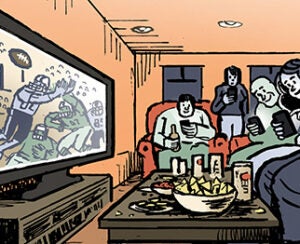
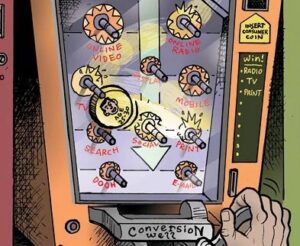
Lastly, cross-platform advertising — from TV to PC to mobile/tablet — will see dramatic change. Nail believes too many buyers see online as a way to extend a campaign’s reach from TV to other devices, when they should be crafting different messages for different audiences according to device, mindset and time.
“There’s such a gap between the consumer and networks and marketers,” Nail said. “Buyers and programmers know they have to close that gap… They need to be focusing on audience buying in a tightly focused sense. If it’s an insurance company, and the target audience is older, you probably don’t need to extend that TV ad to mobile, where the audience tends to be younger. So that thinking has to change before programmatic TV can truly take hold.”