


Demand for connected TV inventory has skyrocketed this year due to more cable MVPDs turning on the programmatic pipes and the ongoing emergence of streaming offerings.
“We’ve seen a huge number of CTV inventory requests coming through,” said Adam Lowy, the director of advanced TV and digital sales for Dish and Sling TV.
That onslaught of demand is unusual, he said, because demand dissipates as networks enter the “doldrums of summer” after every TV upfront.
But those connected TV commitments come with new activation requests – including around measurement and creative.
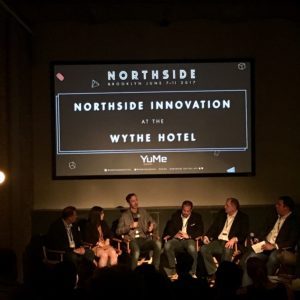
“We used to do monthly reporting, but now it needs to be weekly or, sometimes, on the fly,” said David Klein, managing partner for GroupM-owned agency MetaVision Media, during a connected TV panel with Dish and YuMe at Northside Innovation in New York last week.
“Demand is high, but inventory scale remains a challenge and there are gaps in measurement,” said Brad Wingrove, director of digital ad platforms for Nielsen.
Sling TV sales teams spend a lot more time explaining the technical underpinnings of over-the-top platforms and how brands can take advantage of tactics like dynamic ad insertion. These conversations indicate buyers are getting more sophisticated in their asks.

“We’re getting a lot more questions about what they’re able to render at what time and at what speed,” Lowy said. “There’s a lot more discussion going on than just, ‘Here’s my commercial. Run it.’”
Buyers are also getting choosier about which creative they run in connected TV, whereas in the past, the channel was more experimental.
One benefit of increasing household addressability is that an MVPD like Dish, which has desktop, mobile and OTT apps built around a common household ID, can start to optimize ad creative based on purchase propensity.
MetaVision Media’s Klein agreed – creative is increasingly part of client conversations.
 “For us, in media, we can get so detailed and focused on who we speak to,” he said, “but my creative team will often come back and say they didn’t have enough creative [for a campaign], so we need to bring dynamic creative versioning to CTV.”
Another point of negotiation in CTV activation today is who does the activating.
While broadcast teams used to focus on linear activation, their roles are becoming more diversified as traditional TV increasingly is bought alongside mobile and OTT.
“Today, we see premium inventory on [networks] like Hulu more as complements to our premium TV buys,” Klein said. “That will be the biggest challenge: figuring out which [agency] group buys what video format and connecting that fully to the linear space.”
Sling’s Lowy agreed and noted Dish has seen a shift where more agencies are setting up a centralized, advanced TV team that handles TV buys in a wide range of formats.
“We see tremendous demand coming through for run of network [buys] on our satellite and over-the-top business and Sling TV,” he said. “We are not at a point where one is cannibalizing the other.”









