
Your Doctor’s Office Is An Ad Channel Now
Waiting rooms are the latest surface to get screenified. Meet PatientPoint, a point-of-care video ad network with 145,000 screens in 32,000 doctor offices across the US.

Waiting rooms are the latest surface to get screenified. Meet PatientPoint, a point-of-care video ad network with 145,000 screens in 32,000 doctor offices across the US.
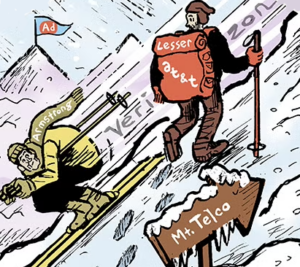
Can a neutral identity layer finally help telcos turn their network data into a viable, privacy-safe advertising business?
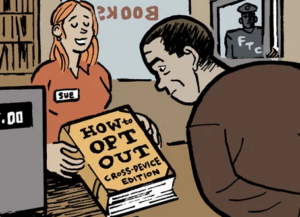
New Jersey’s new data broker law is already live, and the real compliance clock isn’t the 2027 registration deadline – it’s the immediately effective ban on selling sensitive data.

“We’re seeing a huge wave of new rules aimed at children and teens,” says OpenX’s Julie Rooney, “and the common theme is that not knowing who’s in your audience isn’t good enough anymore.”

Whenever a new privacy rule comes on the scene, people immediately look for a workaround. Virginia’s ban on the sale of precise geolocation data will be no exception; its narrow definition of a “sale” almost dares people to try.

Meet Termzy AI, a browser extension that uses DeepSeek’s LLM to analyze and summarize online contracts and surface the most important clauses.
Just because a company doesn’t see itself as a data broker when it looks in the mirror doesn’t mean regulators would agree.

Ashley Casovan, managing director of the IAPP’s AI Governance Center, on how AI is reshaping who does governance work and how.

If you want to see a privacy lawyer who works in ad tech roll their eyes and heave a deep sigh, then speak aloud this acronym: “CIPA.”

IAPP’s Global Summit in DC was a reminder that AI is moving fast – and judges, privacy lawyers and practitioner are racing to keep up.

FTC Commissioner Mark Meador struck a playful note at Marketecture Live with “Private Eyes” by Hall & Oates as his walk‑on music — before diving into the far less playful realities of cookie opt‑outs and self‑regulation.

As companies rush to roll out “helpful” AI bots, they’re inadvertently giving those agents broad access to sensitive data and opening the door to leaks.

Efforts to police children’s data online are running up against the limits of decades-old privacy laws, such as COPPA.
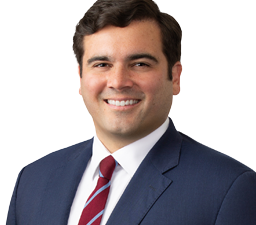
Former Texas privacy enforcer Tyler Bridegan breaks down how regulators decide which companies to target – and how a little common sense can keep you off their radar.

What’s one data privacy shift or regulation that will most reshape digital advertising in 2026 – and who will be most unprepared for it?

From 2015’s ad tech gold rush to today’s cautious comeback, telcos are once again testing whether they can turn subscriber data into ad dollars – this time with privacy as the selling point.
Google recently settled a class-action lawsuit by agreeing to create an off-switch for data sharing in bid requests. Huge deal, right? So why isn’t anyone talking about it?
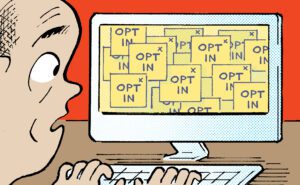
It’s not that people don’t care about their privacy – they do. The problem is that protecting it is often difficult, inconvenient and confusing.

As privacy rules tighten, M&C Saatchi built OneView to help marketers measure performance without relying on cookies or user-level data.

The Trade Desk is facing class-action lawsuits claiming its “privacy-safe” Unified ID 2.0 is really just repackaged cookie tracking.

Privacy isn’t black-and-white, says the FTC’s Chris Mufarrige, promising evidence-driven consumer protection cases under the Trump administration.

When Ours, a telehealth service for couples counseling, launched in 2020, it wasn’t planning to eventually pivot to a health care-focused customer data and privacy compliance platform.

Presearch is a decentralized, privacy‑first search engine that pays users in its own crypto – but also runs an ads business.

How will the California Privacy Protection Agency’s new rules on automated decision making and AI impact ad targeting? We asked the experts.

Regulators care about privacy in practice, not just in theory. Simply having a tool or partnership in place isn’t enough to demonstrate effective compliance.

There’s a saying in Texas: “All hat and no cattle.” It means all talk and no action. That idiom does not apply to the folks within the Consumer Protection Division of the Texas attorney general’s office.

Add digital health and wellness publisher Healthline to the growing list of companies hit with fines under California’s privacy law.

A UK-based early-stage startup called Paapi, which just closed its pre-seed funding round last month, is building a platform to help advertisers with privacy-safe ad measurement.

Whatever your take on the FTC’s oddly conditional green light for the Omnicom/IPG merger, one thing’s clear: The agency is being more active than expected.

But publishers have more power than they think to authenticate their audiences – they’ve just gotta learn how to wield it.