
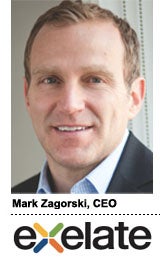
 When marketing data company eXelate introduced optiX in October, it was a shot at disrupting the multibillion-dollar market research industry.
With optiX, which was released following a beta program that included 30 brands, eXelate CEO Mark Zagorski said he wants to enliven the idea of real-time analytics to “all the time” consumer insights that bring together offline and social into traditional display sales.
The tool basically takes “trillions” of offline and online consumer interactions, crunches them together and places them on a dashboard. If marketers need consumer insights quickly, they can then get them through optiX rather than go through a long market research process.
At any given time, eXelate claims a marketer using optiX can get insights on more than 700 million users and 8,000 consumer segments in real time.
“OptiX is different from what a DMP does, because this has nothing to do with segmentation and media delivery,” Zagorski said. “This is a tool that goes into the hands of brand managers, product managers and analytics folks as opposed to the digital execution team.”

Zagorski added that eXelate has no desire to disrupt the DMP space and insists optiX is a complementary solution. “It’s about consumer insight and market research and democratizing the access brands have to data,” he explained. “If anything, this is more about trying to disrupt the market research space, not DMPs.”
EXelate estimates the traditional market research industry (i.e. panels and surveys) at roughly $30 billion annually, a little less than the total yearly online ad sales.
That eXelate can bring a tool like optiX to market reflects advertisers’ embrace of technology.
“Ad tech is no longer a novelty for brands,” Zagorski said. “We’re well past the tipping point in the importance of ad tech to the ad industry. Criteo and Rocket Fuel’s successful IPOs bear that out. So there’s a fundamental shift on the advertiser side. They’re comfortable coming to ad-technology companies directly, as opposed to going through an agency.”
The greater acceptance of ad technology doesn’t necessarily mean that the overall ad sales pie is growing that substantially, Zagorski added. What is changing is how that money is getting spent, not how much. The mantra of doing more with less is everywhere, but it’s particularly well-suited to the SaaS enterprise model as opposed to the volume-based CPM business that most companies in the space have relied on.
Of course, Zagorski is quick to wave off any talk of IPO ambitions for eXelate or a desire to completely shift into a services-based business model — something of a trend among data companies. But while Zagorski said he isn’t that interested in overhauling the way eXelate makes money, he acknowledged the appeal of being able to charge companies licensing fees for the use of its software instead of relying solely on revenue shares tied to impressions.
“OptiX is a SaaS-based model, and although it’s not our first step toward that space, it is our most significant move into the fee-based services.” Zagorski said. “SaaS revenues are always considered the best by Wall Street, because the stream of revenue is so predictable. We like that too, but we’re not trying to please investors with easily recurring revenues. We’re going to build models that make the most sense to our clients.”








