
A Reduction In Service
After being hit with a 460 million euro fine in July in the EU for favoring its own shopping, travel and restaurant services over rivals, Google is now begrudgingly reworking search in Europe to comply with the bloc’s Digital Markets Act.
Google will now show suggestions from other specialized search engines – say, Expedia or Booking.com for a hotel or flight query – before the sponsored placements that would normally top a page. It’s also barred from showing real-time or dynamic pricing for those bookings so that people have to click through to non-Google sites to see the full details.
Google tells Reuters that the changes “mark the largest reduction in quality of service at the world’s most popular internet search engine in its 29-year search history.”
It’s worth noting, however, that Google’s barometer for “quality” is generally whether or not a feature is profitable to, well, Google. Take, for example, the Accelerated Mobile Pages program, AMP for short, which strong-armed publishers into an experience that people largely hated. (AMP has since faded into irrelevancy.)
Meanwhile, these days, “enshittification” might as well be a proper noun for Google Search.
So, when Google says there’s a “reduction in quality of service,” it really just means Google earns less on average per query. Boohoo.
Skyrim Is For The Nords Ads
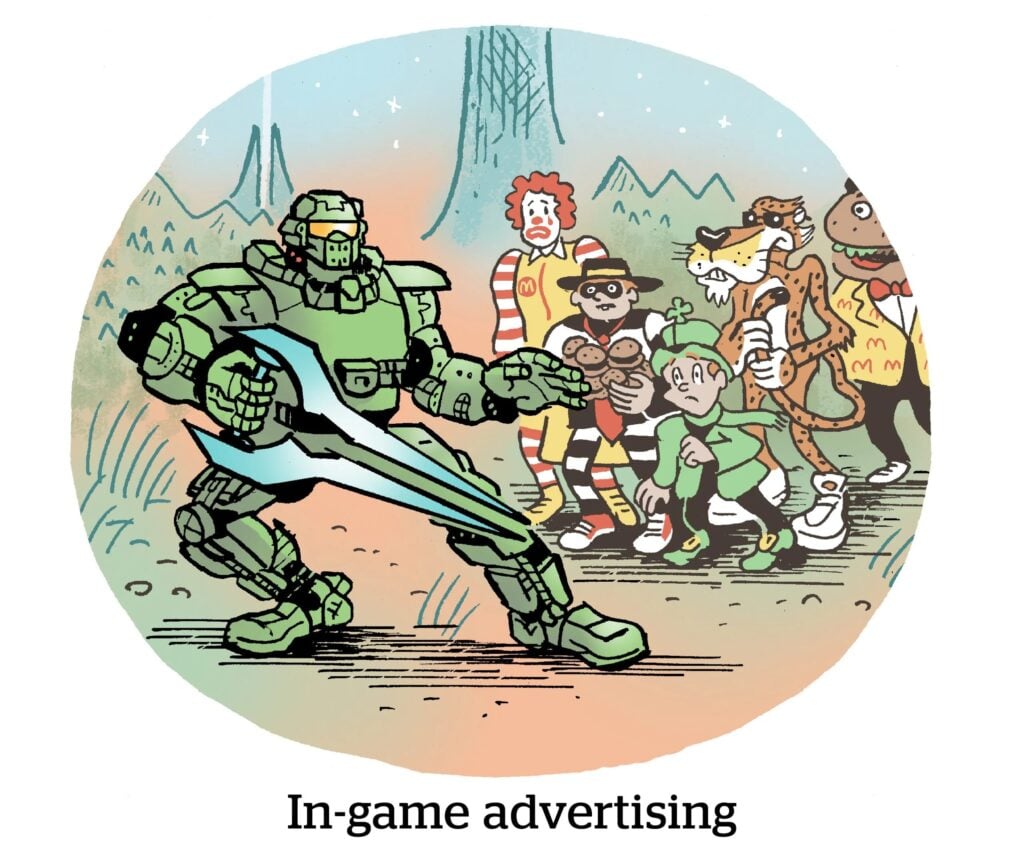
Brands are still trying to figure out how to advertise in video games without seeming out of place. But maybe the best bet is to lean into the incongruity of marketing to gamers while they slay dragons and devour souls.
At least, that appears to be the idea behind Ikea’s new integration with “The Elder Scrolls V: Skyrim,” a critically acclaimed (but 15-year-old) fantasy role-playing game from Bethesda Game Studios.
In case you haven’t played it yet, Skyrim lets you team up with computer-controlled characters that adventure alongside you and carry your loot. Now, a new downloadable game modification sponsored by Ikea lets you recruit a sentient version of the company’s ubiquitous Kallax storage shelf – voiced by “What We Do in the Shadows” star Matt Berry – to carry your burdens, IGN reports.
The activation is noteworthy not just because it’s weird as hell, but because it also speaks to wider trends in the video game market. For one, it feels like a Roblox-esque branded content experience being added to one of the most well-known AAA gaming properties of the past two decades.
But it’s also more evidence of a growing desperation on the part of Microsoft, which owns Bethesda and its IP, to make more money from its games business. Skyrim’s steady stream of re-releases over the years is already a meme. But this Ikea deal just might be the most shameless attempt yet to wring revenue out of a title that’s long past its heyday.
Sub-Par Strategy
Most readers have probably heard of the “strange, bad ad,” as Defector’s David Roth describes it, that was produced in partnership between Callaway and Good Good Golf. (You know, the one that caused execs from both companies to step down.)
But there are lessons for marketing departments beyond the obvious advice not to feature men throwing women to the ground in ads.
For example, brands partner with creators precisely because they trust them to know how to talk to their own audiences. In this case, the marketers at Callaway might have “assumed that there was something in [the ad] they didn’t get,” Roth writes. Frankly, that’s part of the draw of working with creators – they’re supposed to be closer to the fans than you are.
And, sure, maybe the ad did land with a handful of golf bros in their 20s. But it rolled right off the green for the larger audience of golf fans.
The problem is that social media has become “unfathomably segmented” to the point that even influencers with millions of followers aren’t necessarily household names, as marketer Ben Goren writes on his Substack in a piece about Callaway’s disastrous ad.
Trusting too much in influencer-led production can lead a brand badly astray, and influencers don’t enjoy the same widespread goodwill as mainstream celebrity spokespeople when a campaign falls flat.
“When someone doesn’t know who you are,” Goren adds, “they are extremely unlikely to have even a moment of hesitation before throwing you into the garbage can when you bore them, confuse them or, in the case of Good Good, upset them.”
But Wait! There’s More!
Meanwhile, in other bad creator-led advertising decisions, “Not Skinny But Not Fat” podcast host Amanda Hirsch recently apologized for posting a Polymarket ad linked to the Lindsay Clancy trial. [The Cut]
Elon Musk’s America PAC is focusing its $100 million midterm spending blitz on anti-trans political ads, because of course it is. [Axios]
The DOJ has requested more information about the Fox-Roku merger deal. [THR]
There’s a global crackdown underway against social media platforms for harming kids. But does YouTube have a hedge against regulation simply because it’s on TV? And will TikTok and Instagram follow YouTube’s lead as a way to skirt government-imposed social media restrictions? [Next in Media]
Playboy’s president of media and brand contends that “the content is not the product.” Instead, he’s betting that the future of lifestyle publishing will be focused on social media, licensing, in-person activations and celebrity partnerships. [The Rebooting]
Leading AI scientists believe that the tools they’re building could kill humanity. They’re still continuing to build them. [post]
You’re Hired!
Adweek appoints Tim Hart as chief operating officer. [Adweek]
The Washington Post formally names Jeff D’Onofrio as publisher and CEO. [WaPo]
Newton Research hires former LiveRamp exec Christine Grammier as chief customer officer. [release]
Albertsons appoints Meg Whitman as executive chair to help with business growth. [WSJ]








