Even if you attend one of Netflix’s WWE events in person, you won’t be able to escape the ads.
I now know this from experience.
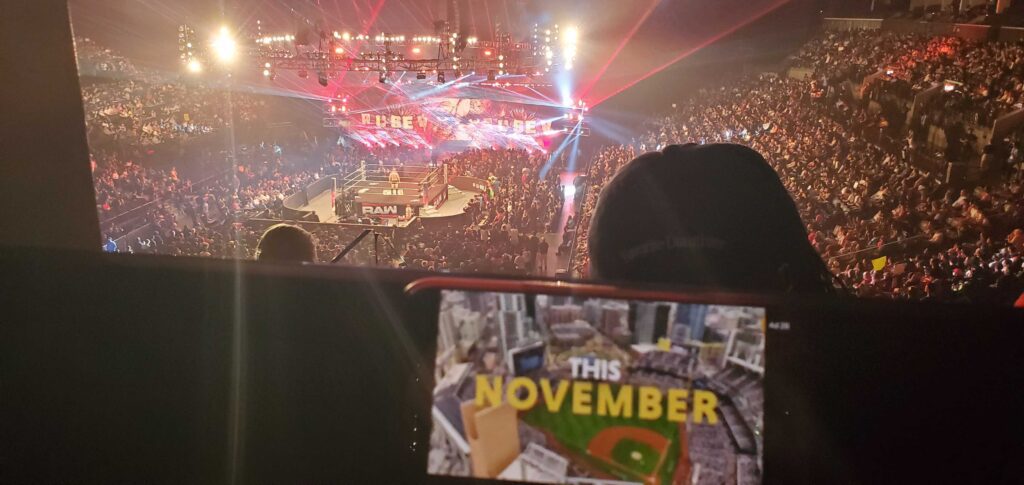
For this week’s “Monday Night RAW” at the Barclay Center in Brooklyn, Netflix invited some press to attend a bodega-themed VIP reception and then watch the show from a private box above the arena.

But I wasn’t there for the main event, I’m sorry to say. (Or maybe I’m not, given some recent controversial decisions the WWE has made both in and outside the ring.)
No, I was there to check out the ad content – to the point where I set up a brand-new ad-supported Netflix account from my phone to see where and when the ad breaks actually start.
Here’s how my little experiment went.
Ready to rumble
First off, the actual mat and ring posts that serve as the main focal point of the show are absolutely covered in brand logos.
Longtime “RAW” viewers will know this as a recent development, which started when Netflix took over the airing rights in January. But from home they might not realize that the logo-covered mat doesn’t appear in the ring during the untelevised preshow. Instead, it gets added on like a slipcover before the broadcast goes live.
This week’s current mat lineup included Minute Maid, Slim Jim, Cricket Wireless and the 2026 FIFA World Cup, among others. These placements were part of a title sponsorship deal brokered with both Netflix and the WWE, along with more traditional ad buys that appear in Netflix’s mid-roll pods.
Some client packages also include other forms of on-screen advertising, such as instant replays, fight commentary and pop-ups that appear during the broadcast.
Not surprisingly, many of the brands with title sponsorship packages already have previous relationships with WWE (Slim Jim comes to mind, obviously) and create wrestling-specific creative for their ads that often features talent from the show.
Putting the “ad” in “ad libs”
Speaking of which, let’s talk about those ad pods.
There were roughly five or six pods altogether, each about three minutes long. The first break started about half an hour in, which seems typical compared to past on-demand episodes.
It’s worth pointing out that even though Netflix is responsible for the ad content, it’s WWE that produces “Monday Night RAW” and decides where those breaks are put in the show.
Watching in person, it’s pretty clear when those breaks are supposed to be happening. Often they get inserted between two wrestlers’ entrances, which can make for some wonky timing if not done at just the right moment. (One wrestler, Rusev, was left furiously wandering around the ring for maybe a little longer than anticipated.)
To fill the time taken up by commercials, WWE also cuts together clip shows or programs live-only extras. If the timing’s off there, though, it might be even more frustrating for viewers, like it was for some Naomi fans on Monday when the current Woman’s World Champion got cut off by the broadcast.
The ads themselves seemed pretty normal, all things considered. In addition to WWE-specific ads from title sponsors or other programs (like “WWE: Unreal,” Netflix’s scripted docuseries), there were ads for cat food brands, pharmaceutical products and even upcoming theatrical releases like “Nobody 2.”
Interestingly, although Netflix reportedly tries to avoid competitive conflicts with its title sponsors, I saw an ad for Total Wireless that actively calls out Cricket Wireless. I asked Netflix why this may have happened, but did not receive a clear answer.
Either way, I didn’t notice any repeats or placements that felt completely irrelevant on a contextual level. Of course, somebody tuning in to a wrestling show would be down for ”Nobody 2.” (Bob Odenkirk pistol-whips a guy!) And, of course, people who live in Brooklyn are buying a lot of cat food. That all describes me pretty well, actually.
One night only
Having now tried it for myself, I would not personally recommend watching the live broadcast of an event you’re also physically attending.
But in this case, I’m glad I did. Because once the show is no longer live, the ad experience changes dramatically.
Officially, mid-roll ads are supposed to appear during the live broadcast regardless of membership tier. Once the show is no longer live, however, ad-supported members will still see ads; subscribers will not.
But for some strange reason, the ads didn’t always load for me. I can see where they’re supposed to be placed, but the first few times I approached a break, nothing happened, and the show kept playing as usual. When they did, they’d only play a single 15-second spot before returning to the action.
Netflix did not communicate to me why this might have happened when I asked, so I can only speculate. Was it a technical glitch? (I was admittedly fast-forwarding through the program to get to the ad breaks, something that only an insane person would do.) Or are there simply fewer breaks in the playback version? And if that’s the case, is it because there’s less advertiser demand for that content when it’s not live anymore and audiences aren’t as engaged?
Either way, the difference between watching live and watching on-demand was pretty stark – which, I suppose, is good news for WWE fans who’ve got better places to be on Monday night. Like hanging out at a fake bodega party, for example.
Questions? Comments? Concerns? Let me know what you think of this newsletter at victoria@adexchanger.com.