

Content creation and media buying are often treated as siloes, especially in agencies. But for social-first shop LV8 (pronounced like the word “elevate”), these two disciplines are inseparable.
LV8 first launched as a digital marketing agency in 2024, offering services related to influencer marketing, content creation and social media management for entertainment-adjacent brands, such as Netflix and Live Nation.

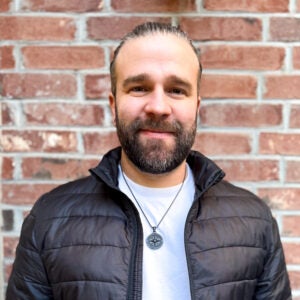
In February, LV8 decided to launch a dedicated, full-service paid media practice and hired Ian Hiscock, whose background lies in music-focused PR, marketing and talent buying, to lead it. Previously, LV8 had mostly outsourced the function.
The paid media team is still quite small – in fact, it’s really only Hiscock at the moment. “I’m kind of a lone wolf at the agency for now, handling all the paid things while everyone else works on the content side,” he told AdExchanger.
But by expanding more into paid media, Hiscock said, LV8 will be able to extend the value of its organic content, as well as gain access to conversion data and deeper insights that many social platforms reserve for buyers.
AdExchanger spoke with Hiscock to learn more about his new role and why he thinks paid media requires good organic content to be successful.
AdExchanger: How does LV8’s organic content strategy inform its paid content strategy?
IAN HISCOCK: The content team will work with creators to develop all kinds of hooks – trying out different angles on all that content, seeing what works best organically and then taking the top performers from the organic side and running those into paid to push them further.
There definitely can be asset creation on the paid side. But, in our case, it’s mostly about further amplifying our high-performing, organic creative.
How do KPIs inform the strategies you develop?
A lot of people get fixated on cost per click, which is very important, but it’s a surface-level metric. We like to take it further and look at things like clickthrough rate or hook rates, which are three-second engaged views divided by the total number of impressions. That’s a measure of the content’s ability to keep people watching.
Hook rate is not a hugely reported metric. It’s actually a custom metric you have to set up in Meta. It’s very common on the organic side of things, but I think looking at it in paid media is becoming a bigger thing.
What are the biggest challenges facing social media marketers?
A lot of advertisers have lost a bit of faith in paid and maybe haven’t felt that it’s as effective as it can be. I think that comes down to content quality.
Some brands still have concerns working with creators, regardless of who it is – just letting someone else’s face be at the forefront of pushing their product or service. But, obviously, influencer marketing has been around for a while, and it’s definitely here to stay.
What impact do you see AI-generated content having on the social media ecosystem?
AI-generated content can feel inauthentic, because it is. I’m pro-AI in a lot of ways, but I’m also not really a proponent of using AI-generated assets. Real, human-created stuff will always perform better.
Where I think AI is incredible, though, is in how the algorithms on TikTok and Meta can take signals from different audiences and find new audiences to serve ads. That’s something that’s really shifted on Meta’s advertising platform in recent years. They used to be very into audience targeting, getting specific with age ranges or regions. But with their new system, you can heavily rely on AI to find the right people to reach, and that works incredibly well.
LV8 describes itself as a “social-first” agency, but are there other channels you’ve considered expanding into, like TV or CTV?
I don’t think we’d be opposed to it, especially CTV. There are a lot of ways to take the concepts that are working well, like vertical video with text on screen, and apply that to CTV.
Within social, Snapchat is uncharted territory for a lot of advertisers. And then the other one I’ve had my eye on is Reddit. I think it’s amazing that you can target ads specifically to subreddits, and there’s a lot of potential there that I’d like to explore with some of our clients.
This interview has been lightly edited and condensed.