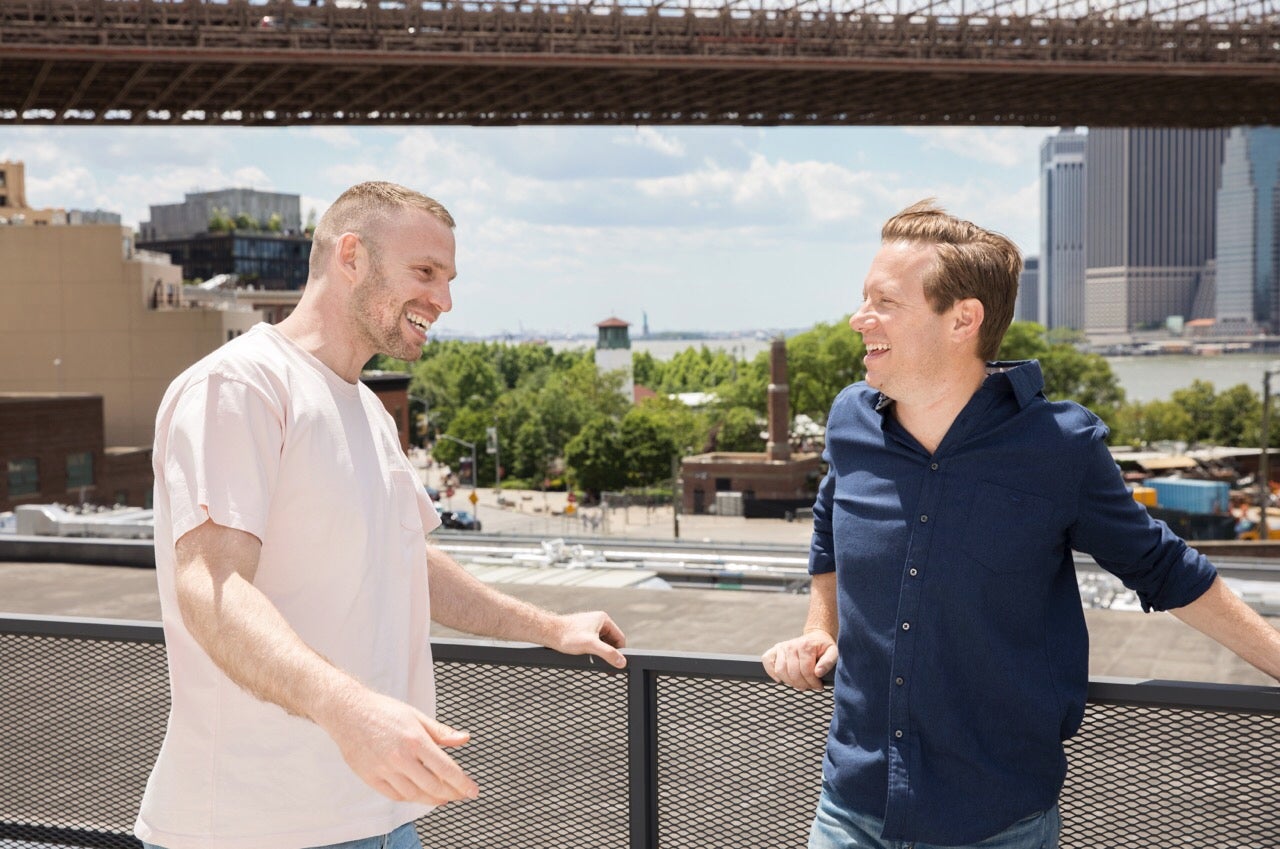
Cycle Media, which launched Monday, hopes to break the mold of the traditional media holding company.
The company is the result of a merger between Cycle, a social content and influencer network formed in 2016, and Laundry Service, a marketing agency with deep roots in social, founded by Stein in 2011 and acquired by sports marketing agency Wasserman in 2015.
Wasserman will operate the new entity, Cycle Media, as a subsidiary and says it will invest up to $150 million in the “first” phase of acquisitions, according to the company.
Cycle Media works with blue chip brands like Nike, Kiehl’s and Canon, and differentiates its services by unifying media buying with broader content creation and social distribution.
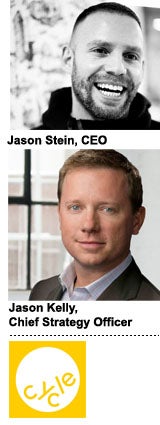
To help it expand and win new business, it’s hired veteran ad tech exec Jason Kelly as chief strategy officer. He will report directly to the founder and CEO of Cycle Media, Jason Stein.
Kelly last served as president at LiveIntent, an email ad tech platform, and before that, he worked at Millennial Media (acquired by AOL), was CEO of Sociomantic (acquired by Tesco/Dunnhumby) and served as CRO of Admeld (acquired by Google).
And it’s no coincidence that the agency, which only had 75 employees two years ago and is on pace to reach 400 by the end of 2017, brought on an exec who earned his stripes executing numerous strategic acquisitions.
“Under this new structure, we will be able to ramp up our resources and future investments with Jason Kelly coming on board,” Stein told AdExchanger.
Kelly will accomplish this agenda by facilitating organic growth, identifying acquisition opportunities that further Cycle Media’s social-first mission or by making new investments into tech and data offerings.

Kelly sees opportunity for Cycle Media to capitalize on “the convergence of editorial, creative, content and distribution of that content within a media entity.”
In combining the agency Laundry Service under the same P&L as its early influencer network and social content arm, Cycle Media believes it can make branded content more efficient and relevant.
For instance, Cycle Media bundles creative production, content, influencer talent and guaranteed reach on its campaigns – all at a fixed CPM.
 Stein hopes this strategy will attract spend from media budgets, including TV and programmatic.
Procurement departments – which have a very bottom-line perspective – often prevent brands from freely investing in as much branded content as they’d like to, Stein said. But bundling all the services associated with branded content into a guaranteed CPM should alleviate that pain point.
“The real money comes from media dollars, and [those buyers] often look for much more value than reach,” he added.
So how can Cycle compete in an environment littered with publisher-owned agencies and other new media holding groups that unify creative and media?
Stein claims the company can be more effective at creating branded collaborations for clients like Nike because it has a direct lens into how content is resonating socially with consumers.
For instance, Cycle Media’s Laundry Service led the distribution of a campaign for Nike-owned Jordan Brand celebrating the final year of Yankees captain Derek Jeter.
The 90-second video, which was produced by Wieden + Kennedy, became one of the most shared videos on Facebook, YouTube and Twitter, thanks in part to the breadth of the agency’s influencer network.
“We’ve found people are just excited to see films created by Cycle for Nike about their talent as they are about our editorial content,” Stein said. “Media companies are now making some of the best advertising, and brands like Red Bull are making some of the best editorial content.”
Laundry Service’s 2016 revenue was $45 million and is on pace to do $65 million in revenue this year.