Bolt From The Blue
Twitter Blue, Twitter’s $3-per-month subscription service, was met with applause this month by digital media and news publishers thrilled to see a tech platform cut them a rev share. Participating publishers offer ad-free articles on Twitter’s in-app browser and earn a share of the Twitter Blue subscription pool in return. The rev share is apportioned per user based on time spent.
Twitter’s stated goal is to earn at least 50% more with ad-free Twitter Blue stories than on ad-supported articles. More than 300 sites have signed up so far. But although the subscription share is the big draw, Twitter Blue has other enticements. For one, publishers own the Twitter Blue reader data as if the activity is happening on their own site, which it is. Publishers don’t see the same data with Facebook’s in-app browser. (Also, take that, AMP.)
But Twitter pales in comparison to Facebook in terms of referral traffic – 1.6% to 24.1%, as per Parse.ly. But walled garden platforms have treated news partnerships as an extension of their “black boxes,” and Twitter is changing that up with a transparent model, Mathew Ingram of the Columbia Journalism Review tells Adweek. “Platform relationships in the past have typically just been, ‘We give you money.’ This feels far more tied to reader activity.”

A Chain Reaction
When people think of retail media, they think of Amazon, Walmart and maybe Target or Kroger. And, to be frank, only Amazon has a meaningful ad platform business that goes beyond the brands carried in a store being obligated to spend retail marketing budgets as part of a distribution deal.
But every chain is in on the idea, from auto parts retailers to department stores.
AutoZone, for example, announced on Tuesday that it’s launching a media platform backed by the retail ecommerce advertising vendor Quotient. That’s the circle of life in action, considering earlier this month Quotient announced that it’s winding down its partnership with Albertsons now that the grocery chain operator says it has the capabilities to in-house its ads business.
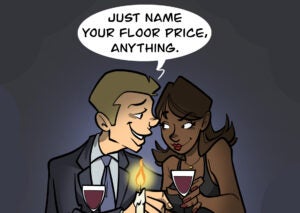
Macy’s is also taking control of its own destiny with the Macy’s Media Network, the department store’s advertising business, and it’s not selling itself short. Macy’s is looking for $25,000 minimums for sponsored product ads, $50,000 for on-site display ads and $150,000 for multichannel audience extension across the web and in apps, Insider reports. But the company is working hard to expand its offering with more formats and inventory options as methods to achieve overall KPIs such as sales, brand awareness, ROAS and new customer acquisition.
Sharing Is Caring
YouTube’s live television bundle, YouTube TV, is in talks with digital-first companies to produce channels it would carry as part of an ad-share agreement, instead of paying a distribution fee as YouTube does with traditional networks. Brat TV and pocket.watch, two studios that make shows geared to teens and kids, are in talks with YouTube TV, The Information reports, as is Vox Media, which produces short informational videos and nonfiction shows. YouTube TV already has similar ad-share deals, including with Cheddar.
Digital media networks have low ratings by cable TV standards. But they come at no cost to YouTube and also add to its pool of inventory on the big screen on the wall. YouTube’s main app is already number one in ad-supported CTV, but, hey, every inch of market share counts.
Also, YouTube wants to get out from under the thumb of traditional programmers. YouTube TV was close to giving a $10-per-month rebate over a dispute with NBCU, if NBCU pulled its networks, although the two sides reached a deal.
The ad-share arrangements with digital media are “a hedge to give them strength in upcoming negotiations with Disney and Viacom,” said one digital media executive in negotiations with YouTube TV.
But Wait, There’s More!
Clean rooms, explained: How they became the buzziest tool in ad tech. [Marketing Brew]
How fake news on Facebook helped fuel a border crisis in Europe. [NYT]
The OOH media platform Place Exchange partners with Uber for car-top inventory sales. [Adweek]
Electronic Frontier Foundation: Google’s Manifest V3 is open web politics in sheep’s clothing. [blog]
DuckDuckGo intros a feature that blocks third-party trackers in any Android app. [PCWorld]
The trendy soap brand Lush Cosmetics says it’s quitting social media because those platforms damage mental health, particularly for teen girls. [CNN]