
 Here’s today’s AdExchanger.com news round-up… Want it by email? Sign-up here.
The Internet Of Sodas
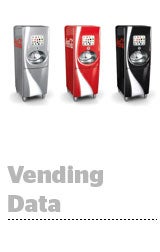
Coca-Cola recently “beaconed the hell out of” its vending machines and real-world locations, and is now figuring out how that new connectedness could drive sales. A loyalty scheme set for this spring, for example, will feature an app that can be used to buy drinks at any Coke vending machine and get rewards (e.g., a free soda). The company also taps Apple Pay and Android Pay as app download workarounds (because let’s be honest, people aren’t keeping the vending machine app on their phone). Any place with the connected vending machines will also get new access to on-location consumer data. More at The Drum.

The Nuclear Option
Ninety percent of Swedish publishers (which, uh, amounts to about 20) will be blocking ad-block users visiting their sites during the month of August. Readers will be prompted to either disable the ad blocker or pay a one-off fee set by the site. Swedish publishers are “uninterested in taking legal action against ad blocking companies or paying to be whitelisted,” writes Digiday reporter Lucinda Southern. It’s a highly regional strategy, but the IAB Sweden will be sharing results for its other national branches to learn from. Read on.
The Platform Play
Some publishers known for social distribution are also ramping up their home-grown platforms, writes Jeremy Barr at Ad Age. The Washington Post’s “Arc” publisher tools can be used by outside sites (WaPo gets paid on the traffic and storage, so there aren’t licensing fees). And Vox Media CEO Jim Bankoff said one major priority for his company is to “extend our technology platforms beyond our own walls.” Vox has its Chorus platform, which targets Vox readers off of its O&O properties. More.
Game Plans
Google plans to bring app game streaming to search ads in the next few weeks, per an announcement at the Game Developers Conference on Monday. Search Engine Land says the new product will “allow users to take games for a test drive before choosing whether to download them.” The ads will have a “try now” button that opens a 10-minute demo and a download button. Re/code’s Mark Bergen writes, “Google’s share of app advertising is rising steadily, although Facebook is still out in front, according to industry sources.”
But Wait, There’s More!
- What Facebook Canvas Could Do For Mobile – Ad Age
- Marketing Land: Annual B2B Automation Report – release
- AdBlock Plus Users Report Problems With YouTube – Digiday
- Integral Ad Science, MediaMath And Others On Viewability – Beet.tv
- Tiller Launches Auditing Site To Beat Ad Blockers – release
- App Annie Makes Its Third Recent Acquisition – TechCrunch
- Choozle Adds Account-Based Targeting Tools – release
You’re Hired!









